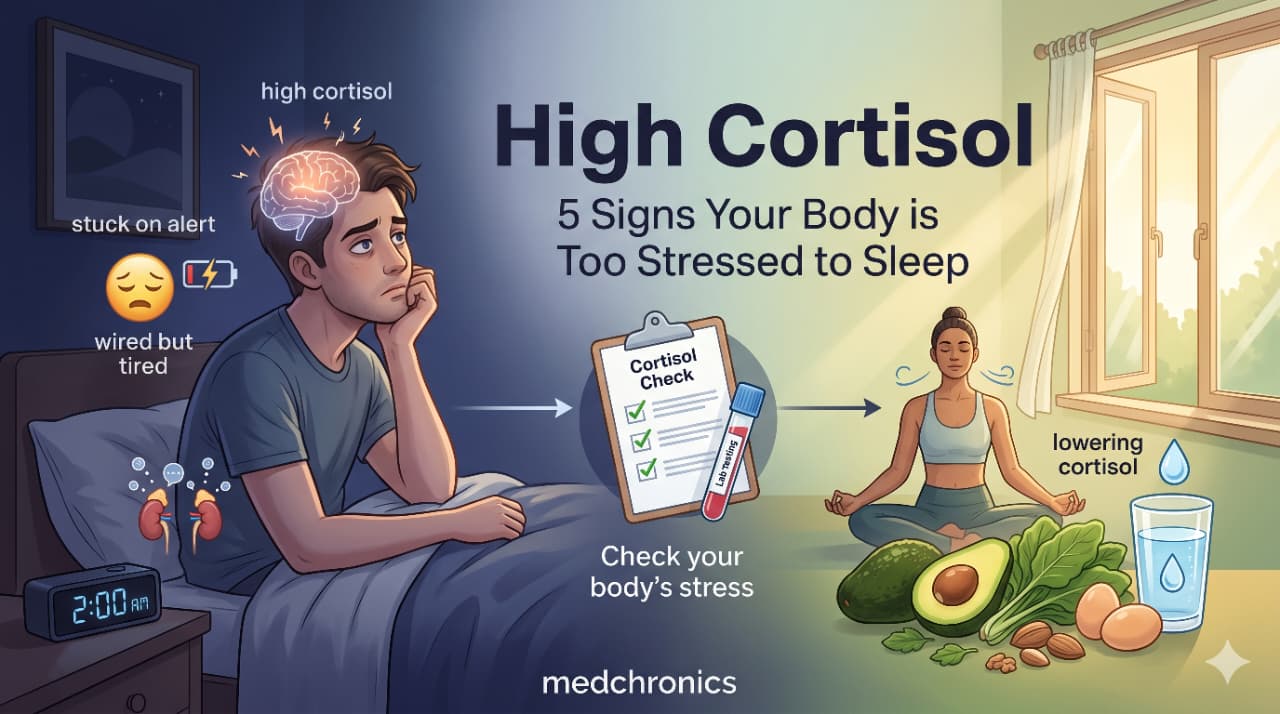
Have you ever felt like a zooming racecar that has completely run out of gas?
Your tires are spinning, your engine is incredibly loud, but you just cannot move forward. You feel completely exhausted all day long while sitting at your desk. But the second your head hits the soft pillow at night, your brain suddenly decides it is time to run a marathon.
You toss and turn in your bed. Your thoughts race at a million miles an hour. You are experiencing a frustrating feeling known as being “wired but tired.”
When this annoying cycle happens, your body’s internal alarm system is broken. It is stuck in the emergency “on” position. In the medical world, we call this high cortisol.
Today, we are going to learn exactly what this means in simple terms. We will explore five clear signs that your alarm system is stuck. Most importantly, we will learn how to turn that noisy alarm off so you can finally get some wonderful rest.
Table of Contents
The Body’s Built-In Alarm System
To understand what is happening inside your body, we need to travel back in time.
- Imagine you are a caveman or a cavewoman living thousands of years ago. You are walking peacefully through a beautiful green forest, picking sweet berries for lunch.
- Suddenly, a giant, hungry bear jumps out from behind a large tree!
- You need to react instantly. You do not have time to stop and think about your options. Your brain sends a lightning-fast signal to two tiny parts of your body called the adrenal glands. These little glands sit right on top of your kidneys like tiny hats.
- They immediately release a special chemical messenger into your blood. This messenger tells your heart to beat much faster. It tells your lungs to breathe deeper to get more oxygen. It sends extra energy directly to your leg muscles so you can run away as fast as possible.
- This chemical is amazing. It is your best friend when you are in real danger.
- It saves your life! Once you run away from the bear and reach your safe, quiet cave, the alarm finally turns off. You can finally relax, eat your berries, and fall fast asleep.
What Causes High Cortisol in Modern Life?
- Fast forward to today. We do not have bears chasing us through the woods anymore. However, our human brains have not changed very much since those ancient caveman days.
- Instead of grizzly bears, we deal with different types of daily stress. We have difficult homework assignments, loud morning alarm clocks, arguments with friends, and bright flashing screens on our phones.
- To your brain, an upcoming math test looks exactly like a hungry bear!
- When you worry about tests, grades, and chores every single day, your alarm system never gets a chance to turn off. It just keeps pumping out that powerful stress chemical day and night.
- Because the alarm never stops ringing, you develop high cortisol. When your body stays in this emergency mode for way too long, your natural energy levels start to break down entirely.
The 5 Warning Signs of Overdrive
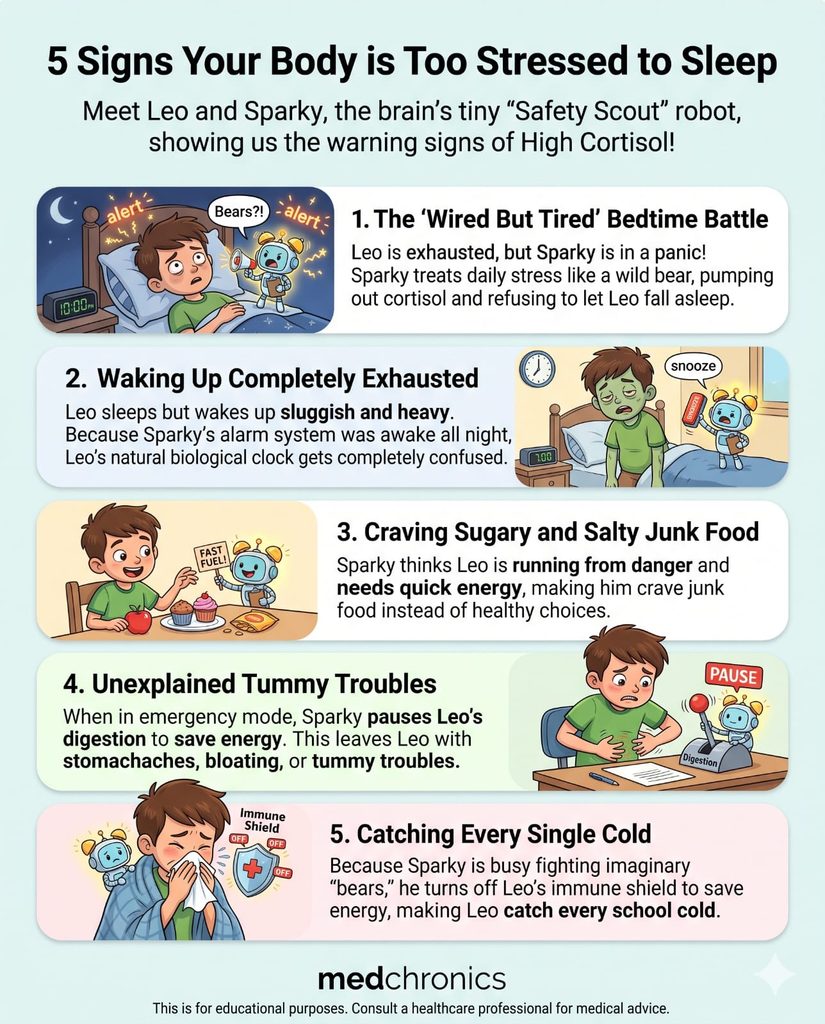
1. The “Wired But Tired” Bedtime Battle
- You drag yourself through the entire day feeling like a sleepy zombie. You cannot wait to finally go to bed. You put on your comfortable pajamas and crawl under your warm blankets.
- But suddenly, your eyes pop wide open! Your heart beats a little faster. You start thinking about something embarrassing you said three years ago.
- This frustrating bedtime battle is a classic sign of high cortisol. Your body still thinks there is a bear outside your bedroom door. It refuses to let you fall asleep because it wants to protect you from danger.
2. Waking Up Completely Exhausted
- Have you ever slept for eight whole hours, but woke up feeling like you did not sleep a single minute?
- Usually, your body is supposed to give you a gentle, natural energy boost in the morning to help you get out of bed with a smile. But when your alarm system is broken, your natural biological clock gets super confused.
- Instead of waking up fresh and ready for the day, you feel heavy and sluggish. You might want to hit the snooze button five or six times. This heavy morning brain fog is directly caused by high cortisol.
3. Craving Sugary and Salty Junk Food
- Think back to the caveman running from the bear. Running for your life takes a massive amount of physical energy.
- If you are constantly in emergency mode, your body thinks you are burning a ton of energy running away from danger. Therefore, your brain demands the fastest fuel possible to replace that lost energy.
- It does not want a healthy apple or a green salad. It wants cupcakes, potato chips, and giant candy bars. According to experts at the Centers for Disease Control and Prevention (CDC), chronic stress completely changes how our bodies handle food. Dealing with high cortisol makes you crave junk food because your body is desperately searching for quick energy to survive.
4. Unexplained Tummy Troubles
- When you are running from a dangerous animal, your body does not care about digesting your breakfast.
- Digesting food takes a lot of time and energy. During an emergency, your brain pauses your digestion so it can send all that energy to your running muscles instead. If your body is always stressed, your digestion stays paused for too long. This means your stomach might hurt. You might feel bloated, gassy, or have to run to the bathroom at random times during the day. Having high cortisol shuts down your stomach and harms your healthy gut bacteria. (If you want to learn more about fixing your digestion, check out our complete guide on Gut Health: Stop Silent Damage).
5. Catching Every Single Cold
- Your body has a magical, invisible shield called the immune system. It fights off germs, viruses, and bacteria every single day to keep you healthy.
- But fighting germs also takes a lot of energy.
- When your body thinks you are in danger, it decides that the “bear” is a much bigger threat than a tiny cold virus. So, it temporarily turns off your immune shield to save energy. Because high cortisol forces your immune system to take a long nap, you cannot fight off normal school germs. You might find yourself getting a runny nose or a cough much more often than your friends do.
How to Lower High Cortisol Naturally
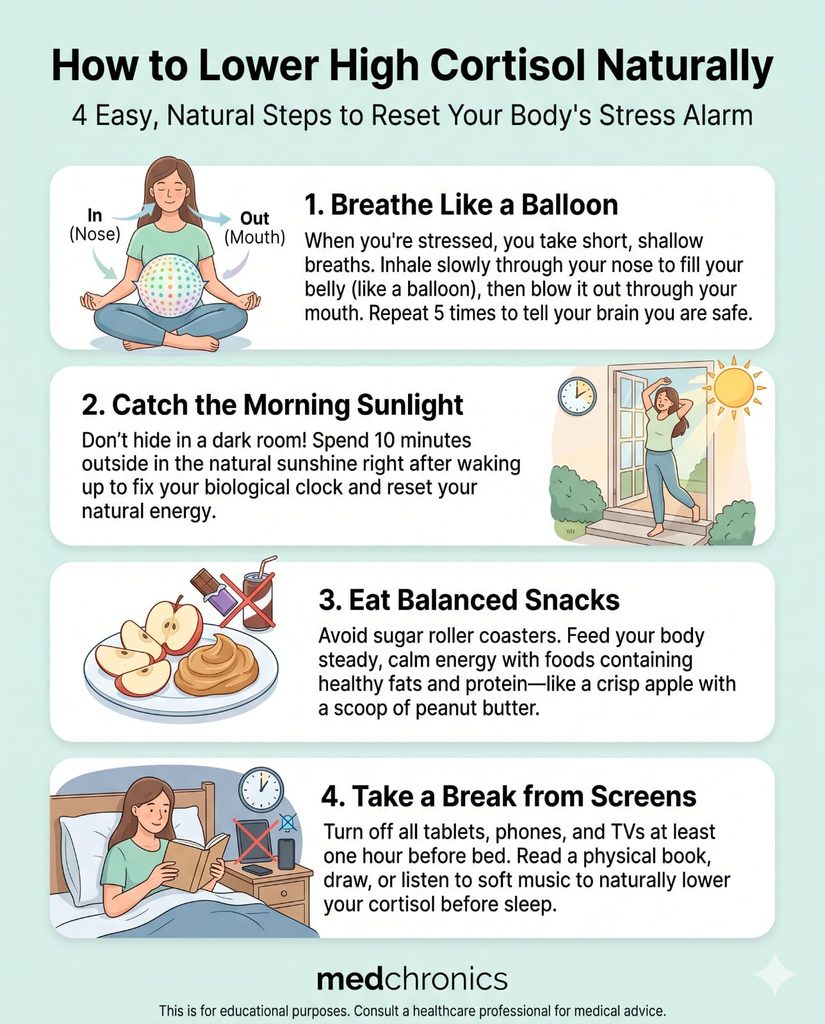
If your internal alarm system is stuck on overdrive, do not panic! You can absolutely fix this. You just need to teach your brain that there are no bears around. You need to prove to your body that you are completely safe. Here are four easy, natural steps to reset your alarm system:
1. Breathe Like a Balloon
When you are stressed, you take very short, shallow breaths. To turn off the alarm, you must do the exact opposite. Imagine your belly is a big colorful balloon. Breathe in slowly through your nose and fill that balloon all the way up. Then, blow the air out slowly through your mouth. Doing this simple trick five times sends a secret message to your brain that says, “I am perfectly safe.”
2. Catch the Morning Sunlight
Your brain gets very confused if you stare at bright screens late at night and hide in a dark room during the morning. To fix your biological clock, step outside into the natural sunshine for ten minutes right after you wake up. This tells your brain that it is daytime and resets your natural energy levels.
3. Eat Balanced Snacks
Instead of riding a wild sugar roller coaster with candy and soda, give your body steady, calm energy. Eat foods that have healthy fats and protein. A perfect snack is a crisp apple sliced up with a big scoop of peanut butter. This keeps your blood sugar flat and keeps your alarm system quiet.
4. Take a Break from Screens
The bright blue light from your tablet, phone, or television tricks your brain into thinking it is still daytime. Turn off all your screens at least one full hour before bed. Read a physical book, draw a picture, or listen to soft music instead. This simple habit helps lower high cortisol right before you go to sleep.
Feeling wired but tired is not fun at all. It makes school harder, sports more difficult, and bedtime super frustrating. But remember, this is just your body’s way of trying to protect you. It is just a little bit confused! By breathing deeply, eating healthy snacks, and taking a break from glowing screens, you can turn off that noisy alarm. You will finally be able to sleep peacefully and wake up feeling like a superhero again.
Frequently Asked Questions
What is the fastest way to relax my body?
The fastest way is taking deep, slow belly breaths. Slow breathing instantly slows down your racing heart rate and tells your brain that you are safe from any danger.
Can I drink soda if I feel wired but tired?
It is best to completely avoid soda. Soda has caffeine and lots of sugar, which makes your alarm system ring even louder. Drink plain water or water with a splash of fruit juice instead.
Why do I feel wide awake at 10 PM?
When your body is stressed all day, it releases an extra burst of emergency energy at night to keep you alert. This makes it impossible to wind down and fall asleep easily.
How long does it take to recover from high cortisol?
To truly fix high cortisol, you just need to practice good sleep habits and eat well. If you do these relaxing activities daily, you can start feeling better in just a few weeks.
Should I exercise if I am exhausted?
Yes, but keep it very gentle! Heavy, intense exercise can actually cause more stress for a tired body. Try going for a relaxing walk outside, riding your bike slowly, or doing simple stretches instead.