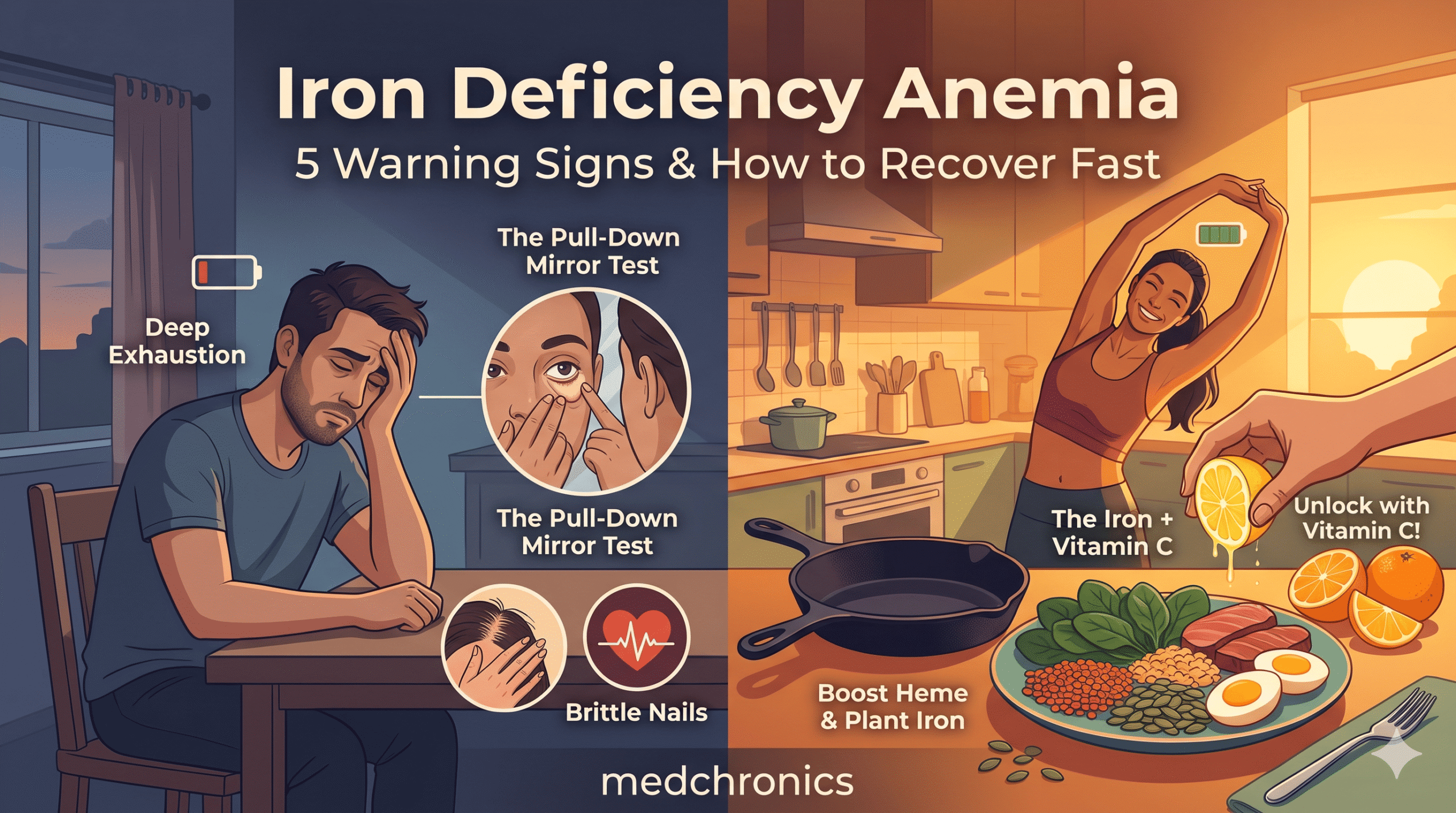
Imagine trying to build a strong, sturdy brick house. You have all your workers ready, but the delivery truck never brings the bricks. No matter how hard the workers try, the house simply cannot be built.
Your body works the exact same way. To build healthy red blood cells—the tiny “oxygen taxis” that give you daily energy—your body needs iron. Iron is the essential brick. When you run out of iron, your blood factory slows down, and your body slowly runs out of oxygen.
This deep energy drain is called Iron Deficiency Anaemia. If you are constantly exhausted, dizzy, or noticing your hair thinning, your body is begging for more building materials. Today, we will explore the five hidden warning signs and the fastest natural ways to recover your energy.
Table of Contents
What Actually Is Iron Deficiency Anaemia?
Inside your bones is a busy factory called the bone marrow. Its main job is to pump out fresh, healthy red blood cells every single day. These cells carry life-saving oxygen to your brain, heart, and muscles.
However, this factory requires a steady supply of raw iron to keep running. When you do not eat enough iron, or if you are losing blood, the factory is forced to slow down production. You end up with fewer oxygen taxis on the road. Without enough oxygen reaching your muscles and brain, you are left feeling completely drained.
5 Warning Signs You Are Running on Empty
Because your body is incredibly smart, it tries to hide this shortage for as long as possible. But unfortunately, the cracks start to show. Here are five silent signs that your iron levels are dangerously low:
1. The “Heavy Legs” Exhaustion
This is not just wanting to take a quick nap after work. This exhaustion feels like your arms and legs are filled with heavy lead. Because your muscles are not getting the oxygen they need to create energy, even simple tasks like carrying groceries or walking to your car can feel like lifting heavy weights.
2. The Pull-Down Mirror Test (Pale Eyelids)
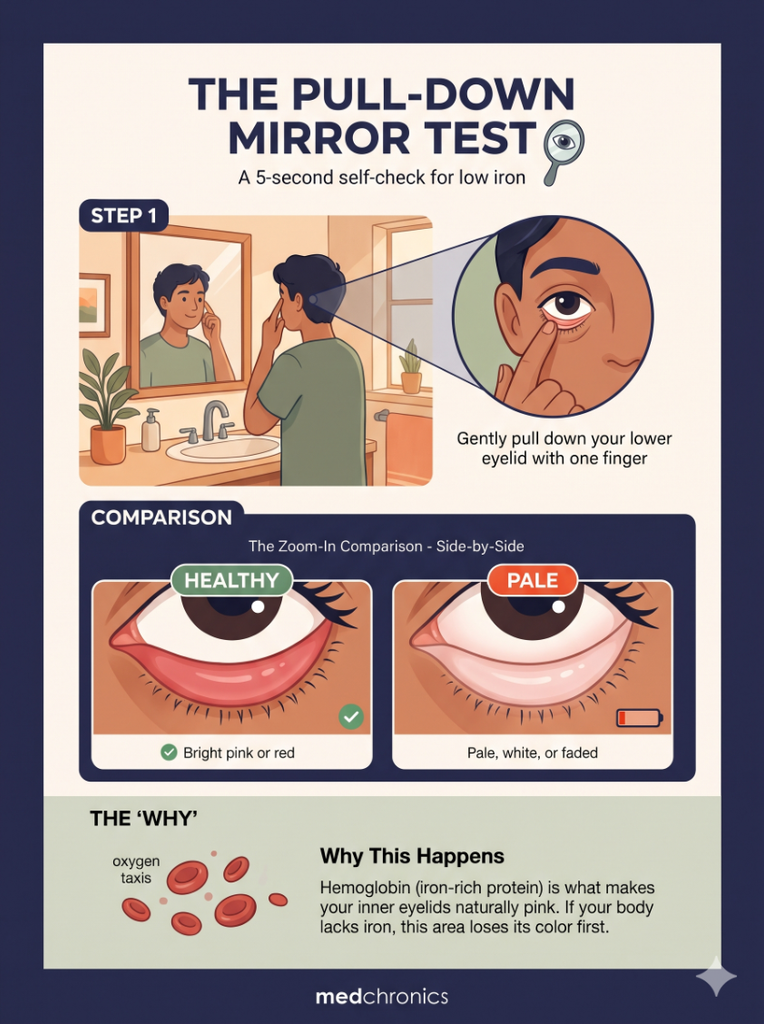
Want to do a quick self-check right now? Pull your lower eyelid down slightly while standing in front of a mirror. The inside rim should be a bright, healthy red or dark pink color. If it looks pale pink or completely white, it is a major warning sign that your blood is lacking iron-rich hemoglobin.
3. Brittle Nails and Thinning Hair
When your body is starving for oxygen, it has to make tough choices. It will send whatever oxygen is left to your heart and brain to keep you alive. It immediately cuts off the supply to “less important” areas like your hair follicles and nail beds. This leaves your nails chipping easily and your hair falling out in the shower.
4. Unexplained Headaches and Dizziness
Your brain uses a massive amount of oxygen to function. When iron deficiency cuts off that supply, the blood vessels in your brain can actually swell, causing constant, throbbing headaches. You might also feel lightheaded or dizzy every time you stand up from a chair.
5. A Fast, Pounding Heartbeat
If there are fewer red blood cells available to carry oxygen, your heart has to pump twice as fast to move the little oxygen you do have. If you feel your heart racing, fluttering, or pounding just from walking across the room, your heart is working overtime to compensate for low iron.
The 3 Hidden Reasons You Are Losing Iron
Where is all your iron going? For most people, it comes down to three hidden traps:
- The Diet Trap: You are simply not eating enough iron-rich foods. This is very common for vegetarians and vegans who do not plan their meals carefully.
- The Hidden Leak: If you are losing blood, you are losing iron. This is the number one cause of iron deficiency in women due to heavy menstrual periods. It can also happen slowly from hidden stomach ulcers.
- The Blocked Door: You might be eating plenty of iron, but drinking black tea or coffee with your meals completely blocks your stomach from absorbing it.
How to Recover Fast (The Iron + Vitamin C Rule)
The good news is that rebuilding your blood supply is highly achievable. You just need to eat the right foods in the right combinations.
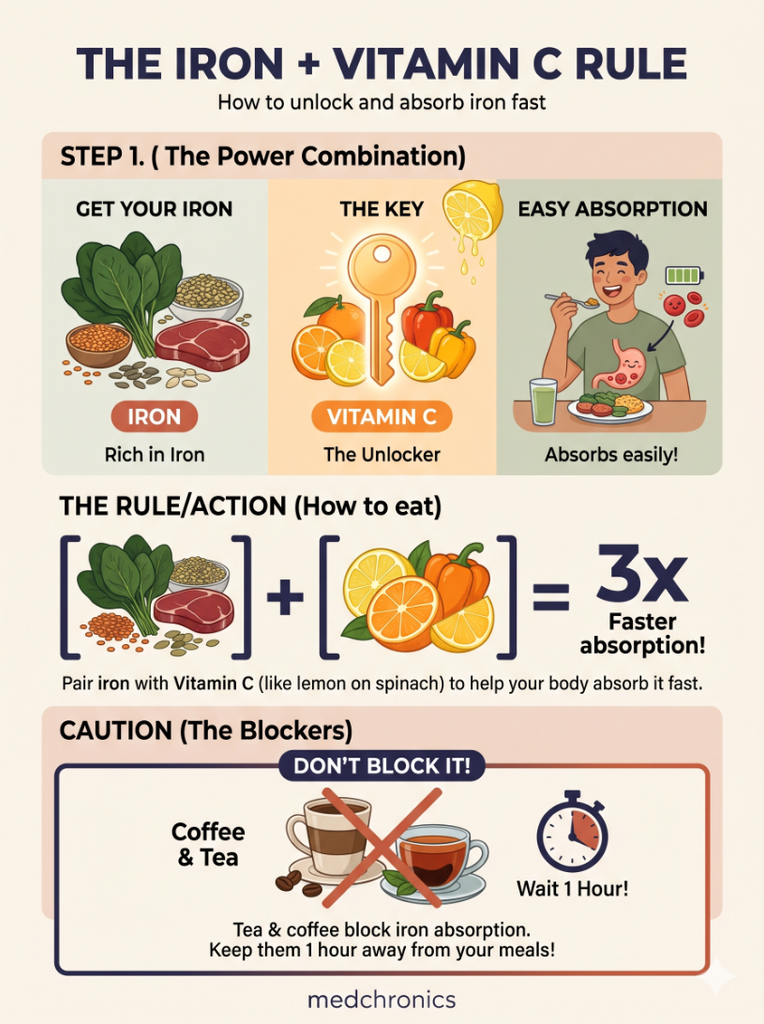
First, your body easily absorbs Heme Iron. This is found in animal products like lean red meat, chicken, and eggs. Eating these will raise your iron levels the fastest.
If you prefer a plant-based diet, you must eat Non-Heme Iron, found in spinach, lentils, and pumpkin seeds. But plant iron is tightly bound. To absorb it, you must pair it with Vitamin C. Drinking a glass of orange juice or squeezing fresh lemon over your spinach salad acts like a key, unlocking the plant iron so your body can actually use it.
When to Ask for an Iron Supplement
While fixing your diet is the first step, you should never try to self-diagnose or buy random iron pills. Taking too much iron when your body does not need it can be toxic and severely damage your liver.
If you relate to the warning signs above, visit your doctor and ask for a CBC (Complete Blood Count) and a Ferritin test. These simple blood tests will show exactly how much iron you have stored in your body. If your levels are extremely low, your doctor will prescribe a safe, high-quality iron supplement to speed up your recovery.
Iron deficiency is fully treatable, but running short of energy is irritating. By paying attention to your body’s warning signs and fueling up with the right nutrients, you can finally get those oxygen taxis back on the road.
Frequently asked Questions
Q: How long does it take to recover from iron deficiency?
You will usually start feeling your energy return within a few weeks of changing your diet or starting a supplement. However, it takes about 3 to 6 months to completely refill your body’s hidden iron “storage tanks.” Consistency is key!
Q: Is eating spinach enough to fix my iron levels?
Spinach is very healthy, but the iron inside plants is locked up and hard for your stomach to absorb. If you rely on vegetables for iron, you must pair them with Vitamin C (like a squeeze of lemon juice or some tomatoes) to unlock the nutrients.
Q: What is the difference between low iron and anemia?
Having “low iron” means your body’s storage supply is running out, but you are still making blood cells. “Anemia” happens when the storage is completely empty, forcing your bone marrow factory to actually slow down the production of red blood cells.
Q: Can my morning tea or coffee really cause low iron?
Yes. Tea and coffee contain natural compounds called tannins that act like a roadblock in your stomach, stopping iron from entering your bloodstream. To avoid this, simply wait at least one hour after eating a meal before drinking your tea or coffee.
Q: Will I need to take iron pills forever?
Usually, no. Once your doctor does a blood test and confirms your iron storage is full again, you can generally stop taking the pills. After that, you can maintain your healthy levels just by eating an iron-rich diet.