Living with an undetected vitamin deficiency can quietly drain your daily energy, weaken your immune system, and disrupt neurological function. Micronutrient depletion often builds up over weeks or months, triggering subtle physical signals long before clear clinical illness appears.
Table of Contents
Most Common Deficiencies Seen Today
- Vitamin D3: Crucial for regulating calcium absorption, maintaining skeletal strength, elevating mood, and activating white blood cells.
- Vitamin B12 (Cobalamin): Essential for manufacturing healthy red blood cells, synthesizing DNA, and protecting the protective myelin sheath around nerves.
- Vitamins C & A: Primary drivers of collagen synthesis, wound repair, visual health, and epithelial barrier defense.
- Critical Micronutrient Co-Factors: Low levels of iron and folate frequently co-occur with vitamin shortfalls, worsening symptoms like tissue hypoxia and chronic weakness.
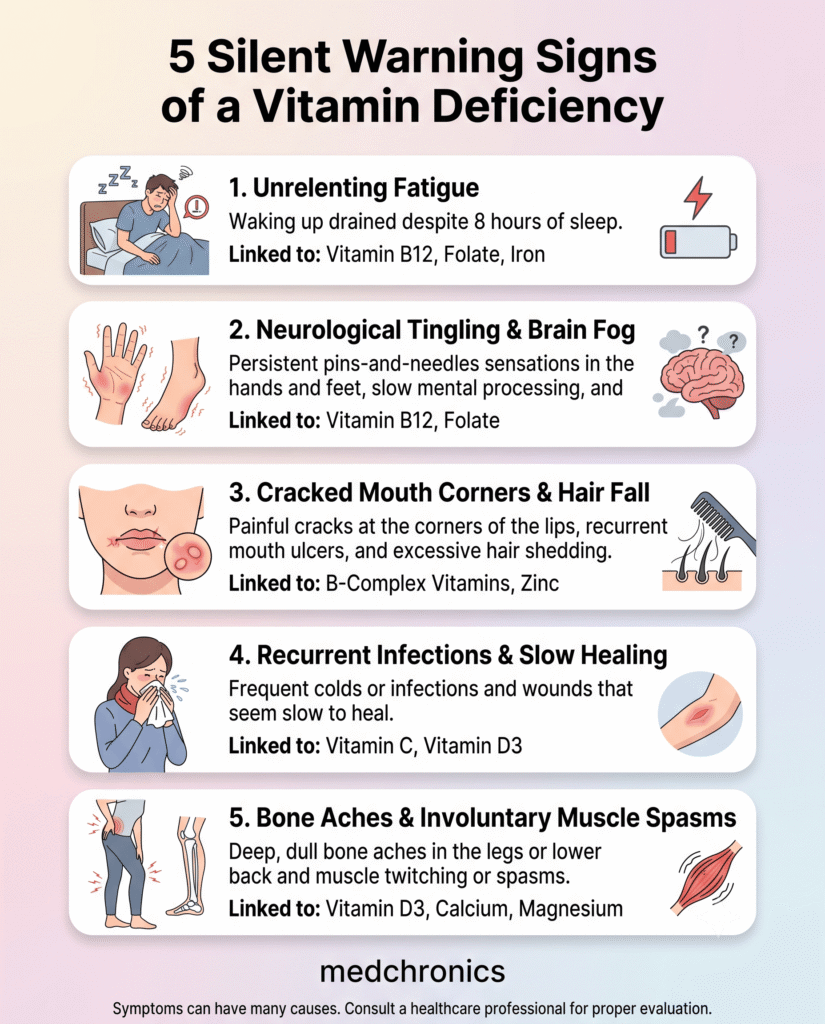
5 Silent Warning Signs of a Vitamin Deficiency
- Unrelenting Fatigue: Waking up drained despite 8 hours of sleep, often linked to impaired cellular oxygen transport from low B12, folate, or iron.
- Neurological Tingling & Brain Fog: Persistent “pins and needles” sensations in the hands and feet, coupled with slow mental processing and poor focus.
- Cracked Mouth at the Corners & Hair Fall: Painful splits at the lip corners, recurrent mouth ulcers, and profuse daily shedding driven by B-complex or zinc deficit.
- Recurrent Infections & Slow Healing: Catching frequent colds or noticing that superficial cuts and bruises take weeks to resolve due to low Vitamin C and D3.
- Bone Aches & Involuntary Muscle Spasms: Deep, dull bone pain in the legs and lower back or muscle twitching around the eyes caused by inadequate Vitamin D3, calcium, or magnesium.
Daily Causes Beyond an Unbalanced Diet
Vitamin deficiency is rarely caused by poor dietary choices alone. Several underlying biological and lifestyle factors directly affect how your body absorbs and retains essential nutrients:
- Impaired Gut Absorption: Underlying digestive inflammation—such as celiac disease, bacterial overgrowth (SIBO), or low stomach acid—prevents the small intestine from assimilating fat-soluble vitamins and B12.
- Medication Interactions: Long-term use of daily proton pump inhibitors (PPIs) drastically reduces B12 and magnesium absorption, while metformin can lower circulating cobalamin over time.
- Minimal Sun Exposure: Modern indoor work schedules and extensive sunscreen use block the ultraviolet B (UVB) rays needed for cutaneous Vitamin D3 synthesis.
Fast and Accurate Clinical Diagnosis
Serum 25-Hydroxy Vitamin D: The most accurate blood test to evaluate systemic D3 storage levels and guide targeted supplementation.
Complete Blood Count (CBC) with MCV: Evaluates red blood cell volume; elevated mean corpuscular volume (MCV) points toward B12 or folate deficiency, while low MCV suggests iron deficiency.
Functional Biomarkers and Serum B12: Combining routine serum B12 testing with Methylmalonic Acid (MMA) and Homocysteine shows hidden, intracellular shortages even when standard blood tests appear borderline normal.
Natural Recovery and Daily Replenishment
- Prioritize Nutrient-Dense Foods: Include whole eggs, fatty fish, lentils, seeds, citrus fruits, and dark leafy greens in your regular weekly diet.
- Optimize Safe Sun Exposure: Spend 15 to 20 minutes in mid-day sunlight with uncovered arms and legs several times weekly to trigger natural Vitamin D synthesis.
- Pair Nutrients for Maximum Uptake: Consume fat-soluble vitamins (A, D, E, and K) with healthy dietary fats like olive oil or nuts, and pair plant-based iron sources with Vitamin C-rich foods.
Red Flag Symptoms Requiring Immediate Care
- Unsteady walking, loss of balance, or progressive numbness spreading up the arms or legs.
- Severe shortness of breath upon light exertion, accompanied by pale inner eyelids or nail beds.
- Sudden confusion, unexplained memory gaps, or acute mood changes that do not resolve with rest.
Correcting a vitamin deficiency requires objective clinical testing rather than guessing with random multivitamins. Identifying early warning signs and making targeted adjustments to your daily nutrition and sun exposure will safely restore long-term cellular energy and immune resilience.
Frequently asked Question
Q. How long does it take to recover from a vitamin deficiency naturally?
Mild deficiencies addressed through dietary adjustments typically show symptomatic improvement within 4 to 8 weeks. However, replenishing depleted internal tissue stores—especially for fat-soluble vitamins like Vitamin D3 or liver-stored Vitamin B12—often takes 3 to 6 months of consistent nutrient intake and optimal absorption.
Q. Can a healthy diet alone fix a severe vitamin deficiency?
A nutrient-dense diet works well for prevention and mild shortages, but moderate-to-severe deficiencies or absorption disorders (like celiac disease or low stomach acid) usually require therapeutic clinical supplementation. Once blood levels normalize, a balanced whole-food diet maintains adequate long-term stores.
Q. Why can normal serum B12 blood test results still miss a deficiency?
Standard serum B12 tests measure both active and inactive forms circulating in the blood. If symptoms like tingling or brain fog persist despite “normal” blood numbers, doctors use functional markers like Methylmalonic Acid (MMA) and Homocysteine, which elevate when cells lack usable, active B12.
Q. How do everyday medications cause vitamin deficiencies?
Certain medications interfere directly with nutrient uptake. Daily acid reducers (PPIs and H2 blockers) lower stomach acid, which is required to cleave Vitamin B12 from dietary protein. Similarly, long-term metformin use can impair calcium-dependent B12 absorption in the ileum.
Q. What are the red-flag symptoms that require urgent medical attention?
Seek immediate clinical evaluation if you experience progressive numbness spreading up your limbs, loss of physical balance (unsteady gait), sudden memory gaps or confusion, or severe breathlessness during minimal physical exertion.