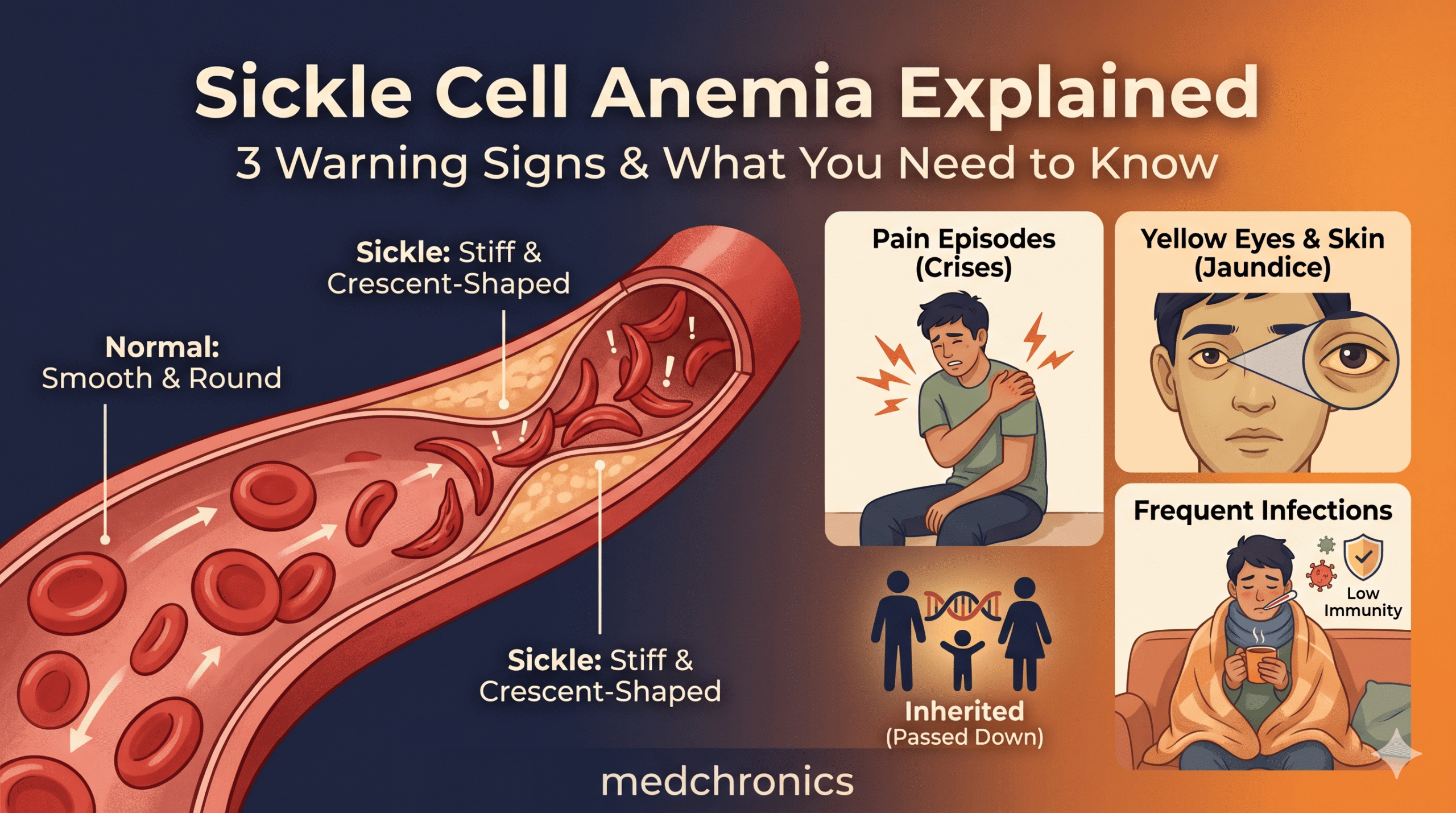
In our previous guide about the main types of anaemia, we talked about how red blood cells act like tiny “oxygen taxis.” Their job is to travel through the highways of your blood vessels, delivering fresh oxygen to every part of your body.
Normally, these oxygen taxis are shaped like smooth, squishy donuts. Because they are round and flexible, they can easily squeeze through even the smallest blood vessels without getting stuck.
But what happens when the factory builds these taxis in the wrong shape? This is exactly what happens in Sickle Cell Anaemia. Today, we are going to explain this condition in simple terms, look at the top three warning signs, and explore how it is managed.
Table of Contents
What Exactly is Sickle Cell Anaemia?
Unlike iron-deficiency anaemia, which happens because of your diet or blood loss, sickle cell anaemia is something you are born with. It is an inherited genetic condition.
Because of a tiny error in the body’s DNA blueprint, the bone marrow factory creates red blood cells that are stiff, sticky, and shaped like a crescent moon (or a farm tool called a “sickle”).
The “Traffic Jam” in Your Veins
The shape these cells causes two major problems for the body:
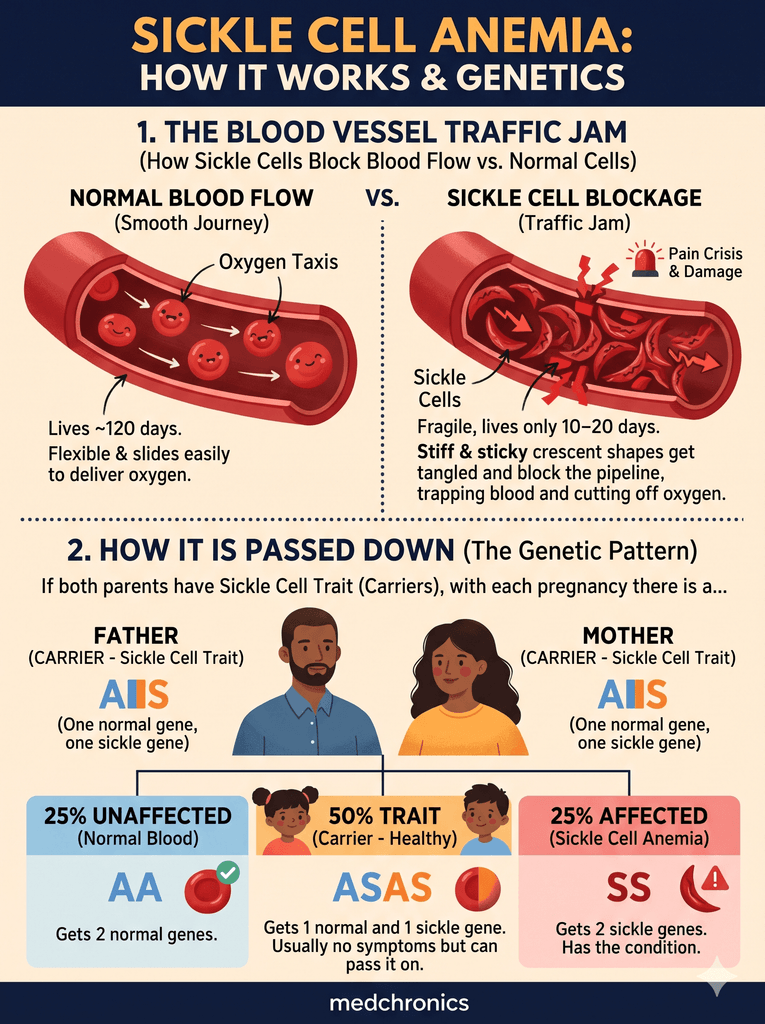
- They Break Down Too Fast: A normal, round red blood cell lives for about 120 days. A sickle cell is fragile and usually breaks apart in just 10 to 20 days. Because they get destroyed faster than the body can make new ones, the person suffers from a constant shortage of oxygen taxis (anaemia).
- They Cause Roadblocks: Imagine trying to push a handful of curved, stiff twigs through a narrow pipe. They will get tangled and block the pipe. Sickle cells do exactly this. They get stuck in small blood vessels, creating a “traffic jam” that stops oxygen from reaching the muscles and organs.
3 Warning Signs You Need to Know
Because this is a condition people are born with, symptoms usually begin to show when a baby is around 5 to 6 months old. Here are the three main warning signs:
1. Unpredictable “Pain Episodes” (Sickle Cell Crises)
The most frequently seen and challenging symptom is this particular one. When the sickle cells create a traffic jam in the blood vessels, the tissues get starved of oxygen. This causes sudden, severe pain called a “pain crisis.” The pain can happen anywhere—most commonly in the chest, arms, legs, or lower back. These episodes can last for a few hours or even a few weeks.
2. Yellowing of the Eyes and Skin (Jaundice)
When sickle cells break down inside the body, they release a yellow substance called bilirubin. Because sickle cells die so quickly (in just 10 to 20 days), the liver gets completely overwhelmed and cannot filter this waste out fast enough. This build-up of bilirubin causes the whites of the eyes and the skin to look noticeably yellow.
3. Frequent Infections and Fevers
In a healthy body, an organ called the spleen acts as a water filter, catching germs and fighting infections. But in sickle cell anaemia, the sticky, stiff cells often damage the spleen. Without a fully working filter, the body becomes much more vulnerable to common colds, flus, and serious infections.
How is it Diagnosed and Treated?
Today, a simple blood test can diagnose sickle cell anaemia. In many countries, this test is a standard part of newborn baby screenings so that parents know exactly what to do from day one.
While it is a lifelong condition, modern medicine has made incredible progress in helping people manage it and live full, active lives. Treatments usually focus on stopping the traffic jams and reducing pain:
- Hydration: Drinking plenty of water keeps the blood flowing smoothly, making it harder for the sticky cells to clump together.
- Special Medications: Doctors often prescribe medicines like Hydroxyurea, which actually helps the body produce bigger, rounder red blood cells that don’t get stuck.
- Pain Management: Heating pads, rest, and pain-relieving medications help patients comfortably get through a pain episode.
The Best Diet and Lifestyle for Sickle Cell Anaemia
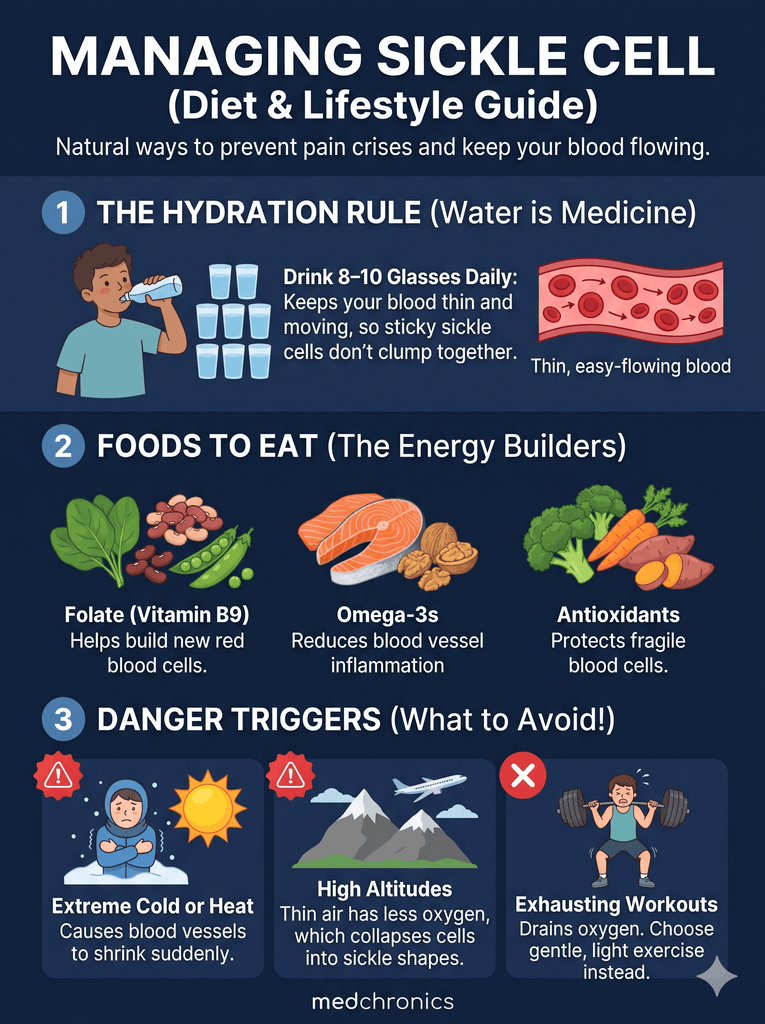
While medication helps manage the condition, what you eat and how you live plays a massive role in preventing those painful “traffic jams” in your blood vessels.
1.The Hydration Rule (Water is Medicine) For someone with sickle cell anaemia, water is not just a drink; it is medicine. When you are dehydrated, your blood becomes thicker and stickier, making the sickle cells clump together much faster. Drinking 8 to 10 glasses of water every single day keeps the blood thin and flowing smoothly.
2. Foods to Eat: The Energy Builders Your bone marrow factory is working in overdrive to replace the sickle cells that break down too fast. It needs constant fuel. Focus on a high-protein, nutrient-rich diet:
- Folate (Vitamin B9): Found in spinach, beans, and peas. Your body absolutely needs folate to build new red blood cells.
- Omega-3 Fatty Acids: Found in salmon and walnuts. These act like a natural lubricant for your blood vessels, helping to reduce inflammation.
- Colorful Vegetables: We discussed earlier how important vegetables like broccoli, carrots, and sweet potatoes are. They are packed with antioxidants that protect your fragile red blood cells from breaking down even faster.
3. The Danger Triggers to Avoid Certain everyday things can instantly trigger a sickle cell pain crisis. If you have this condition, you must carefully avoid:
- Extreme Cold or Heat: Jumping into a freezing cold swimming pool or walking out into freezing weather causes your blood vessels to shrink suddenly, instantly trapping the sickle cells.
- High Altitudes: The air in the mountains or in unpressurized airplane cabins has less oxygen. This lack of oxygen causes more of your red blood cells to collapse into the “sickle” shape.
- Heavy Workouts: While light, gentle exercise is good, intense weightlifting or sprinting uses up too much oxygen and leads to severe dehydration, both of which trigger immediate traffic jams in your veins.
The Genetics: Why Does It Happen?
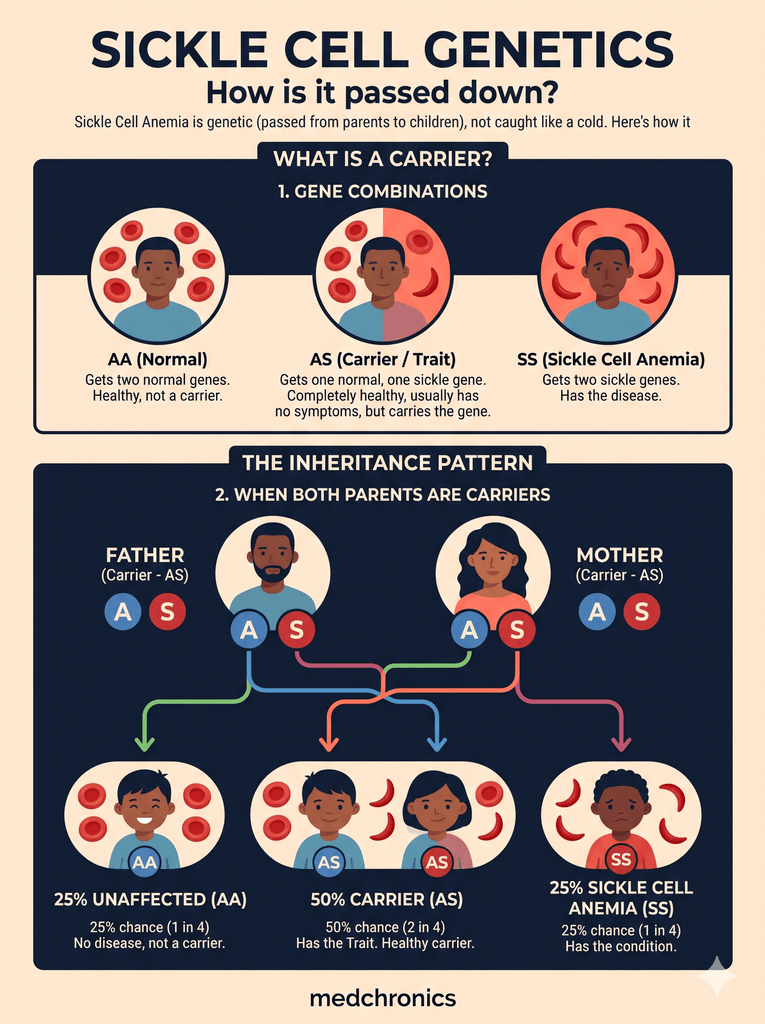
Sickle cell anaemia is completely genetic. You cannot catch it from someone else like a cold.
For a child to be born with sickle cell anaemia, both parents must carry the sickle cell gene (called the sickle cell trait) and pass it down. If a person only gets the gene from one parent, they will have the “sickle cell trait” but will not actually have the disease.
Living with sickle cell anaemia requires care and attention, but with the right medical team, a healthy lifestyle, and a deep understanding of the body’s warning signs, patients can successfully manage their condition and protect their oxygen taxis.
Frequently Asked Questions
Q: Is sickle cell anemia contagious?
No, sickle cell anemia is not contagious. You cannot catch it from someone by coughing, sneezing, or touching them. It is a genetic condition, which means you can only get it if you inherit the genes from both of your parents.
Q: Can a person with sickle cell anemia live a long life?
Yes. In the past, sickle cell anemia was a very dangerous condition, but today, thanks to modern medicine, better treatments, and simple lifestyle changes (like staying hydrated), people with sickle cell anemia are living long, active, and fulfilling lives.
Q: What is the difference between sickle cell anemia and the sickle cell trait?
If you have “sickle cell anemia,” you inherited two sickle genes (one from each parent) and you actually have the disease. If you have the “sickle cell trait,” you only inherited one sickle gene. People with the trait are healthy and do not have symptoms, but they can pass the gene to their future children.
Q: Why does cold weather trigger a pain crisis?
When you step into freezing cold weather or jump into cold water, your blood vessels instantly shrink to keep your body warm. Because sickle cells are stiff and sticky, these smaller, shrunken blood vessels make it much easier for the cells to get stuck and cause a painful traffic jam.
Q: What should I eat to help manage my sickle cell anemia?
Focus on a diet that helps your body build new blood cells and reduces inflammation. Eat foods rich in folate (like spinach and beans) to help build new red blood cells, and omega-3 fatty acids (like salmon and walnuts) to keep your blood vessels healthy. Most importantly, drink 8 to 10 glasses of water a day to keep your blood flowing smoothly.