
Table of Contents
A sudden spike in body temperature can feel alarming. One morning you feel energetic, and by the afternoon, an intense fever takes over, accompanied by shivering, body aches, and overwhelming exhaustion. When a high fever appears out of nowhere and lasts for a few days without an obvious cause like a severe cough or a skin infection, doctors often categorise it as Acute Febrile Illness (AFI).
Because an acute fever can stem from anything from a mild seasonal virus to potentially serious conditions like dengue or malaria, understanding how AFI works helps you take the right steps early, protect your organs, and avoid unnecessary complications.
What is Acute Febrile Illness (AFI)?
Acute Febrile Illness (AFI) is defined medically as a sudden onset of fever—typically exceeding 38°C (100.4°F)—that lasts anywhere from a few days up to two weeks (less than 14 days) without an immediately identifiable localised origin.
A fever is not a disease on its own; it is your body’s immune defence system activating an alarm. When foreign invaders enter your circulation, your immune cells release signalling proteins called pyrogens. These tell the hypothalamus (the brain’s internal thermostat) to turn up the heat. A higher body temperature creates a hostile environment for viruses and bacteria while helping immune cells multiply and fight back.
The primary clinical challenge with AFI is that in the first 24 to 48 hours, almost every tropical infection looks nearly identical. A patient with early dengue, malaria, or typhoid may experience the exact same generalised fever, fatigue, and headache before condition-specific patterns emerge.
How Do Pathogens Invade to Trigger Acute Febrile Illness?
Pathogens use multiple environmental and biological doorways to enter the human body and trigger a systemic febrile reaction:
- Vector-Borne Transmission: Bites from infected insects inject pathogens directly into your bloodstream. Mosquitoes transmit illnesses like Dengue, Chikungunya, and Malaria, while microscopic mites (chiggers) transmit Scrub Typhus.
- Enteric Ingestion: Ingesting water or food contaminated with bacterial pathogens—such as Salmonella Typhi (Typhoid)—allows microbes to penetrate the intestinal wall and enter the lymphatic system.
- Aerosol and Inhalation: Droplets released when an infected person coughs or sneezes introduce respiratory viruses (such as Influenza) directly through mucous membranes in the nose and throat.
- Waterlogged Skin and Mucosal Contact: Wading through contaminated floodwater or stagnant puddles allows bacteria like Leptospira (Leptospirosis) to enter through tiny cuts, scrapes, or mucous membranes.
Once inside, these organisms multiply rapidly. Your immune system responds by flooding the bloodstream with inflammatory chemicals, leading to the widespread body aches and fever spikes characteristic of AFI.
Core Symptoms of Acute Febrile Illness (AFI) & Critical Warning Signs
While the exact presentation depends on the underlying organism, most cases of AFI share a cluster of common early symptoms:
- Sudden high-grade fever accompanied by chills or shivering
- Intense generalized muscle pain (myalgia) and joint stiffness
- Severe headache, frequently presenting as pain behind the eyes (retro-orbital pain)
- Extreme weakness, loss of appetite, and nausea
Critical Red Flag Signs (Seek Emergency Care Immediately)
Certain symptoms indicate that the infection is putting severe stress on your circulatory system or vital organs. Seek urgent medical attention if you notice:
- Spontaneous Bleeding: Bleeding gums, nosebleeds, blood in vomit or stools, or tiny reddish-purple spots on the skin (petechiae).
- Persistent Abdominal Pain & Vomiting: Inability to keep fluids down, accompanied by tenderness in the upper right abdomen.
- Fluid Retention or Facial Puffiness: Swelling around the eyes, hands, or abdomen indicating plasma leakage.
- Altered Mental State: Confusion, extreme drowsiness, dizziness, or fainting.
- Drastic Drop in Urine Output: Not passing urine for over 6 to 8 hours, signalling dehydration or early kidney strain.
- Cold, Clammy Skin: Unusually cold hands and feet despite a high core temperature, which can signal a dropping blood pressure.
Common Causes of Acute Febrile Illness
Acute Febrile Illness is an umbrella term encompassing several distinct infections, frequently peaking during and directly following rainy or monsoon seasons:
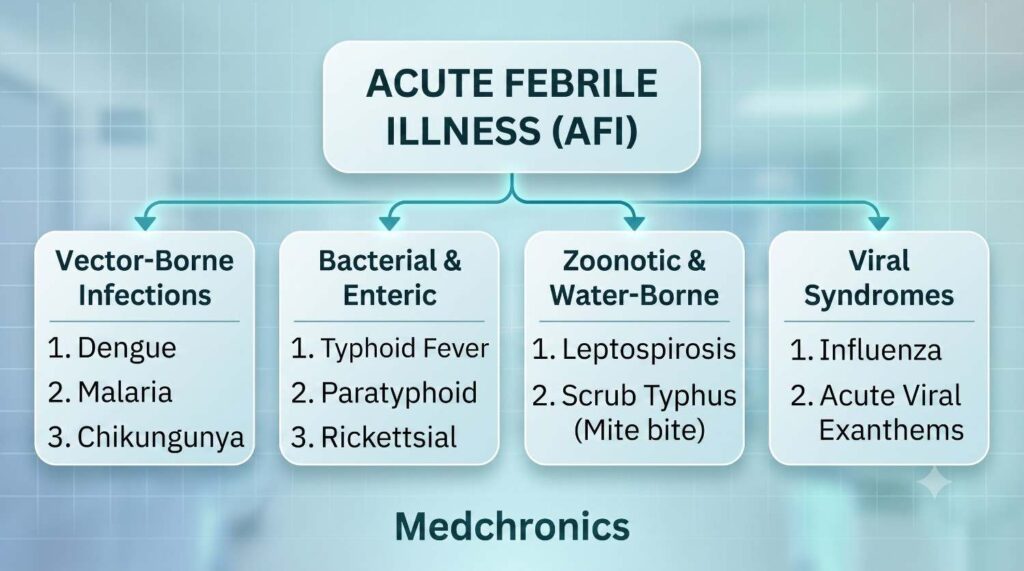
- Dengue Fever: A viral infection known for sudden high fever, retro-orbital eye pain, bone-breaking aches, and the risk of sudden platelet drops.
- Malaria: A parasitic infection transmitted by Anopheles mosquitoes, characteristically causing cyclic chills, sweating stages, and anaemia.
- Typhoid Fever (Enteric Fever): A bacterial infection causing a step-ladder rising fever, coated tongue, stomach discomfort, and severe lethargy.
- Scrub Typhus & Rickettsial Fevers: Transmitted by larval mites, often leaving a painless, dark scab-like mark (eschar) on the skin.
- Leptospirosis: A bacterial infection linked to floodwaters contaminated by animal urine, commonly causing high fever, red eyes without discharge (conjunctival suffusion), and calf muscle tenderness.
Risk Factors and Vulnerable Populations
Anyone can develop an acute febrile infection, but certain groups face a higher risk of developing severe complications:
- Young Children and Infants: Their immune systems are still developing, making them more vulnerable to rapid dehydration and febrile seizures.
- Older Adults (Ages 60+): Reduced physiological reserves mean infections can rapidly strain the heart, kidneys, and lungs.
- Pregnant Women: Physiological immune shifts make pregnant individuals more susceptible to severe malaria or dengue complications.
- Individuals with Chronic Conditions: People with diabetes, hypertension, chronic kidney disease (CKD), or liver conditions experience greater systemic stress during acute infections.
- Environmental Exposure: Living near stagnant water collections, traveling to endemic regions, or working in agricultural/flooded areas significantly increases exposure risk.
Dangerous Complications of Acute Febrile Illness
When left untreated or unmonitored, systemic infections can escalate into serious medical conditions:
- Plasma Leakage and Hypovolemic Shock: In severe dengue, blood vessels become porous, allowing plasma to leak into body cavities. This causes blood pressure to plummet (Dengue Shock Syndrome).
- Severe Thrombocytopenia: A rapid drop in platelet counts compromises your body’s clotting ability, increasing internal bleeding risks.
- Multi-organ Dysfunction Syndrome (MODS): Sepsis can trigger uncontrolled inflammation that impairs liver and kidney function simultaneously.
- Cerebral Complications: Parasites or inflammatory toxins crossing into brain tissue can cause seizures, delirium, or cerebral malaria.
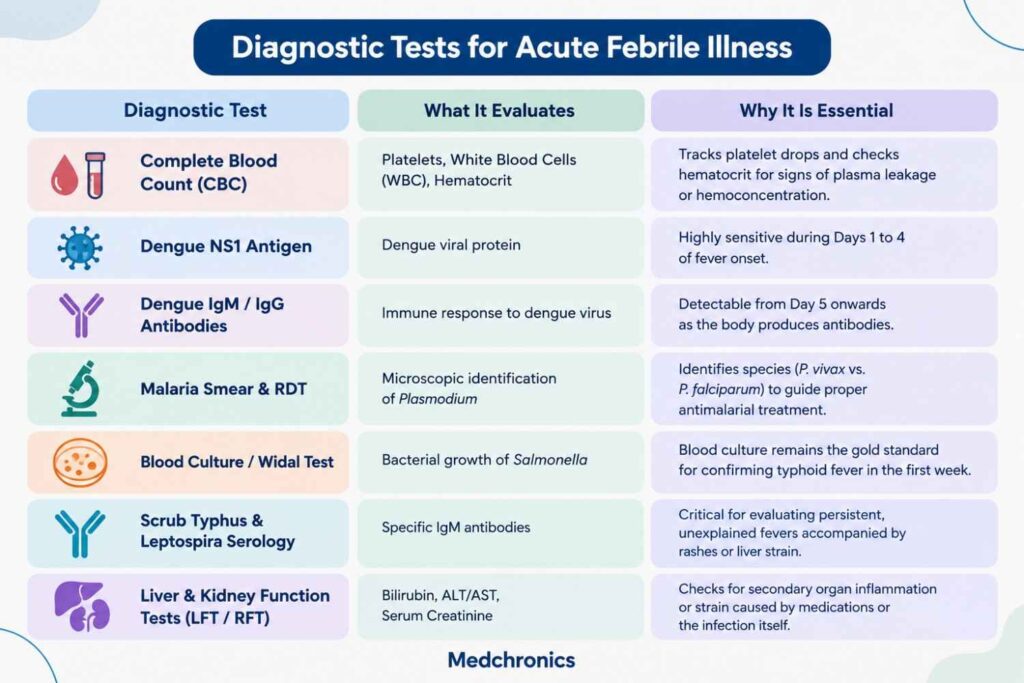
Essential Diagnostic Tests for Acute Febrile Illness (AFI)
Because symptom patterns overlap extensively, laboratory testing is crucial for confirming the diagnosis and monitoring organ function:
Evidence-Based Treatments for Acute Febrile Illness
Proper treatment requires a targeted approach based on lab results rather than guessing with over-the-counter pills.
1. Safe Symptom Management (Antipyretics)
- Paracetamol (Acetaminophen): The safest initial medication for controlling temperature and reducing body aches. Follow dosing instructions provided by your doctor.
- Critical Safety Warning (Avoid NSAIDs): Never take Ibuprofen, Aspirin, Diclofenac, or Mefenamic acid during an unexplained acute fever. If the fever turns out to be dengue, these pain relievers thin the blood, impair platelets, and dramatically raise the risk of severe stomach bleeding.
2. Aggressive Hydration
Maintaining adequate circulating fluid volume is the most critical factor in managing AFI:
- Drink plenty of fluids: Oral Rehydration Salts (ORS), coconut water, clear vegetable broths, and clean water.
- Hospitalized patients may receive monitored Intravenous (IV) crystalloid fluids to stabilize blood pressure and prevent kidney strain.
3. Targeted Pathogen-Specific Therapies
- Antimalarials: Artemisinin-based Combination Therapies (ACT) are prescribed only after malaria is confirmed via blood tests.
- Specific Antibiotics: Prescribed for confirmed bacterial infections such as Typhoid or Scrub Typhus (e.g., Doxycycline or Azithromycin as directed by a healthcare professional).
- Avoid Self-Prescribing Antibiotics: Viral fevers like dengue and flu do not respond to antibiotics. Taking antibiotics unnecessarily causes gut dysbiosis and fuels drug resistance.
Lifestyle Modifications & Daily Precautions During Recovery
Recovering from an acute infection requires deliberate rest and supportive care:
- Embrace Easily Digestible Nutrition: The gut is often sluggish during acute illness. Focus on warm, light meals like rice porridge (khichdi), lentil soups (dal), boiled vegetables, and fresh fruits like papaya, pomegranate, and apples.
- Track Your Hydration with Urine Checks: Your urine should remain pale yellow or clear. Dark amber urine or going hours without urinating means you need to increase your fluid intake immediately.
- Enforce Strict Physical Bed Rest: Avoid the temptation to return to work or exercise as soon as the fever drops. Physical exertion during early recovery increases cardiac fatigue and prolongs weakness.
- Watch the “Critical Phase”: In illnesses like dengue, the most dangerous window often occurs 24 to 48 hours after the fever subsides (usually Days 3 to 6). This is when plasma leakage and platelet drops tend to peak. Continue monitoring for warning signs even after your temperature normalizes.
How Can You Prevent Acute Febrile Illness (AFI)?
Preventing acute febrile illnesses (AFI) centers around interrupting insect vectors and practicing strict food and water safety:
Direction Control at Home
- Inspect your home weekly for standing water: empty flower pot trays, uncleaned coolers, discarded tires, and open water buckets where mosquitoes breed.
- Apply mosquito repellent containing DEET, Picaridin, or Oil of Lemon Eucalyptus to exposed skin.
- Use window mesh screens and sleep under mosquito nets, particularly for daytime sleepers (since the Aedes dengue mosquito bites primarily during daylight hours).
Food & Water Hygiene
- Drink only boiled, filtered, or sealed bottled water, especially when dining out or traveling.
- Wash raw fruits and vegetables thoroughly under clean running water before consumption.
- Avoid raw or undercooked street foods that may have been washed with untreated water.
Personal Precautions During Rains
- Wear light-colored, long-sleeved clothing and trousers when outdoors around dawn or dusk.
- Wear protective waterproof footwear when walking through flooded or waterlogged streets to avoid leptospirosis exposure.
Look Beyond the Thermometer
A high fever is your immune system’s signal that an active defense is underway. Rather than simply suppressing the temperature with random medications, focus on identifying the underlying cause early.
By getting timely blood work within the first few days, maintaining steady hydration, avoiding unsafe painkillers like NSAIDs, and watching for critical warning signs, you protect your vital organs and ensure a safe, complete recovery.
Frequently Asked Questions
Q. Can I start an antibiotic immediately if I get a high fever?
No. Most early acute fevers are viral (such as dengue or influenza), which antibiotics cannot treat. Taking antibiotics without a confirmed bacterial diagnosis can mask symptoms, cause stomach upset, and contribute to antibiotic resistance. Always consult a doctor for proper diagnostic testing first.
Q. Why does blood pressure drop during certain acute fevers?
In conditions like dengue, increased capillary permeability allows fluid from the bloodstream to seep into surrounding tissues. This loss of fluid within the blood vessels lowers total blood volume, leading to a dangerous drop in blood pressure if not corrected with fluids.
Q. When should I get a blood test (like CBC) done after a fever starts?
If you have a mild fever without warning signs, doctors typically recommend testing around Day 2 or Day 3. However, if your fever is unusually high, accompanied by severe shivering, vomiting, or any red flag signs, get a CBC and screening tests done within the first 24 hours.
Q. What is the difference between a common cold fever and AFI?
A standard cold usually develops gradually, presents with prominent upper respiratory symptoms (runny nose, sneezing, mild sore throat), and rarely causes high-grade fever. AFI typically begins abruptly with high temperatures (>100.4°F), intense full-body pain, and minimal initial respiratory symptoms.