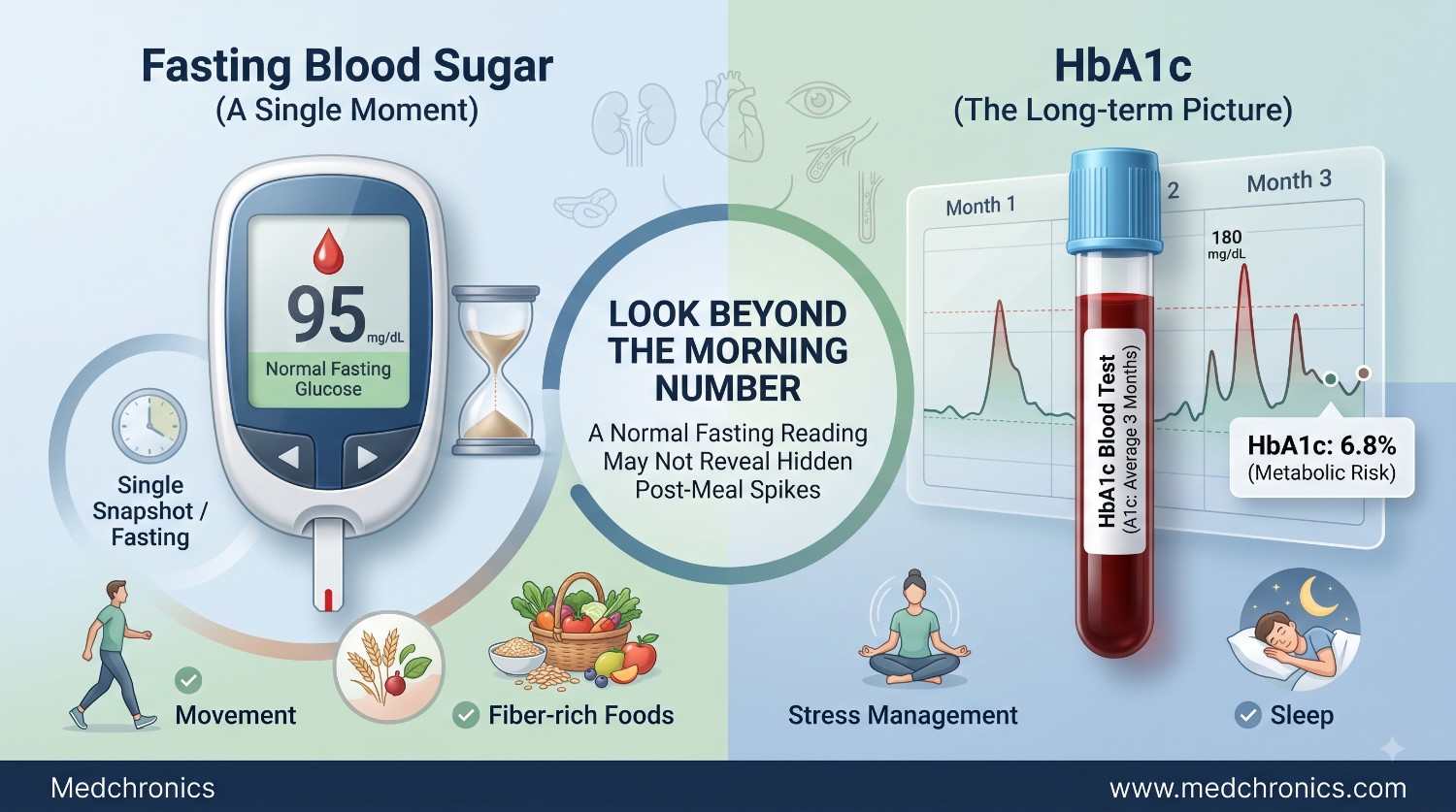
Let’s talk about HbA1c vs Fasting Sugar. One day you wake up and perform your morning finger prick, and see a number comfortably resting below 100 mg/dL. It is easy to breathe a sigh of relief, assume everything is under control, and go about your day. However, relying solely on that single morning check can create a dangerous sense of false security.
Fasting glucose provides only a brief, isolated snapshot of your metabolic state. Behind a seemingly healthy morning reading, unseen glucose spikes throughout the afternoon and evening could still be placing silent stress on your vascular system. Understanding the relationship between HbA1c and fasting sugar is essential for protecting your long-term vitality.
Table of Contents
The Dangerous Trap of “Fake Normal” Sugar
To truly understand how glucose behaves, consider the difference between a single photograph and a full-length movie.
A fasting blood sugar test is like a photograph. It captures what is happening in your bloodstream at one exact second after a night of rest. It cannot tell you what happened yesterday afternoon, nor can it show how your body handled dinner last night.
An HbA1c test, on the other hand, is like a three-month movie recording. It tracks the cumulative sugar exposure your blood cells experienced over the past 90 to 120 days. Even if your morning reading looks calm and stable, high sugar surges following lunch, snacks, or evening meals leave a permanent molecular footprint that a standard morning prick completely misses.
Understanding the Basics: HbA1c vs. Fasting Sugar Explained
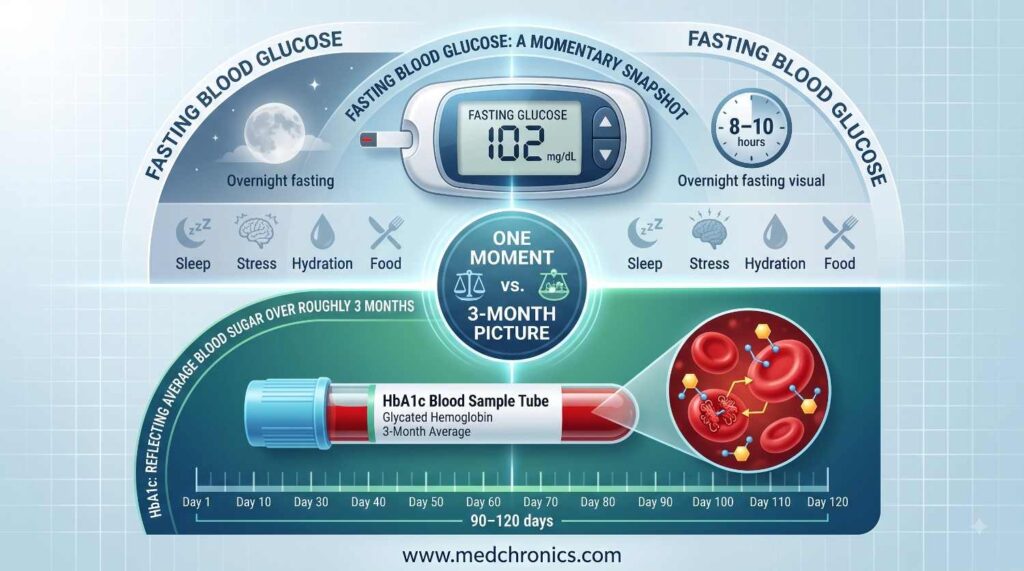
HbA1c and Fasting Sugar: Both diagnostic tools serve vital roles in metabolic management, but they measure glucose dynamics through fundamentally different mechanisms.
- Fasting Blood Glucose: This metric measures the concentration of free-floating glucose circulating in your plasma after an 8 to 10-hour fast. Because it represents a momentary value, it is highly sensitive to external variables such as poor sleep, acute psychological stress, mild dehydration, or an unusually light dinner the night before.
- HbA1c (Glycated Haemoglobin): When glucose circulates in your bloodstream, a portion naturally binds to haemoglobin—the oxygen-carrying protein inside red blood cells. Since red blood cells have a natural lifespan of roughly 90 to 120 days, measuring the percentage of glycated haemoglobin delivers an uncheatable record of your average blood sugar over three months.
Why Comparing HbA1c vs. Fasting Sugar Reveals Hidden Spikes
Relying exclusively on morning numbers leaves significant metabolic blind spots that can distort your overall health profile:
- The Post-Meal Blind Spot: Blood sugar frequently spikes two hours after carbohydrate-dense meals. If your body takes several hours to bring those levels down, delicate micro-vessels in your eyes, kidneys, and nerves remain bathed in excess glucose all day, even if your levels normalise by the following morning.
- The Rollercoaster Effect: A person whose blood sugar swings wildly between severe daytime spikes of 240 mg/dL and late-night dips of 65 mg/dL might show an average fasting reading of 95 mg/dL. While the morning number appears ideal, the underlying volatility causes progressive cellular inflammation.
- The Dawn Phenomenon: The liver naturally releases stored glucose in the early morning hours to provide waking energy. Depending on hormonal output, this can cause morning readings to appear temporarily elevated or suppressed, offering an inaccurate representation of baseline control.
Quick Comparison Guide: HbA1c vs. Fasting Sugar
| Metric / Feature | Fasting Blood Sugar (Daily Finger Prick) | HbA1c Blood Test (Lab Work) |
| Measurement Window | Real-time (Single point in time) | 90 to 120 Days (Cumulative average) |
| Preparation Needed | Strict 8–10 hours fasting | No fasting required |
| Daily Sensitivity | High (Altered by stress, sleep, hydration) | Low (Unaffected by day-to-day fluctuations) |
| Primary Clinical Purpose | Immediate dietary & medication adjustments | Assessing long-term complications & organ protection |
How to Read Your Results: Diagnostic Reference Ranges
Fasting Blood Glucose Ranges
- Normal: Below 100 mg/dL
- Prediabetes: 100 to 125 mg/dL
- Diabetes Threshold: 126 mg/dL or higher on multiple occasions
HbA1c Reference Ranges
- Normal: Below 5.7%
- Prediabetes: 5.7% to 6.4%
- Diabetes Threshold: 6.5% or higher
Practical Routine: How to Use Both Tests for Total Control
Gaining true metabolic mastery requires using both tools in harmony rather than choosing one over the other:
- Use Daily Finger Pricks for Feedback: Check your fasting levels along with occasional post-meal readings (1 to 2 hours after eating) to understand how specific foods, physical exercise, and stress directly impact your system.
- Schedule an HbA1c Every 3 to 6 Months: Treat this routine lab test as your quarterly metabolic review. It confirms whether your daily habits are effectively preventing long-term vascular and renal strain.
- Aim for Stability Over Single Numbers: Focus on smoothing out sharp daytime spikes through balanced meals, consistent daily movement, and adequate hydration rather than simply optimising a single morning reading.
Powerful Lifestyle Modifications to Lower HbA1c & Fasting Sugar
While testing gives you the data, daily habits give you the power to change it. Implementing targeted lifestyle adjustments can significantly reduce both your fasting glucose and your 3-month HbA1c average:
- Prioritise Post-Meal Movement: A simple 10 to 15-minute brisk walk after lunch or dinner helps your active muscles absorb excess glucose directly from your bloodstream without needing extra insulin.
- Focus on Soluble Fibre: Incorporating fibre-rich foods like oats, lentils, chia seeds, and leafy greens slows down carbohydrate digestion, preventing sharp post-meal sugar surges.
- Manage Stress and Cortisol: High mental stress triggers cortisol and adrenaline, hormones that signal your liver to dump stored glucose into your blood. Daily deep breathing, yoga, or meditation helps keep stress-induced spikes at bay.
Optimise Sleep Quality: Chronic sleep deprivation reduces insulin sensitivity, making it much harder for your body to process glucose efficiently the next day. Aim for 7 to 8 hours of restorative rest nightly.
Frequently Asked Questions
Q. Can my fasting sugar be normal while my HbA1c is high?
Yes. This frequently occurs when glucose levels surge significantly after meals throughout the day and remain elevated for extended periods, but gradually return to a normal baseline overnight. The HbA1c test captures these daytime surges that a morning test misses.
Q. Do I need to fast before taking an HbA1c test?
No. Because HbA1c measures glucose bound to red blood cells over their entire lifespan, eating, drinking, or exercising immediately before the blood draw does not alter the result.
Q. How often should someone with diabetes check their HbA1c?
Most clinical guidelines recommend an HbA1c assessment every 3 months if you are adjusting medications or working to stabilize glucose levels, and every 6 months once your metabolic targets remain steady.