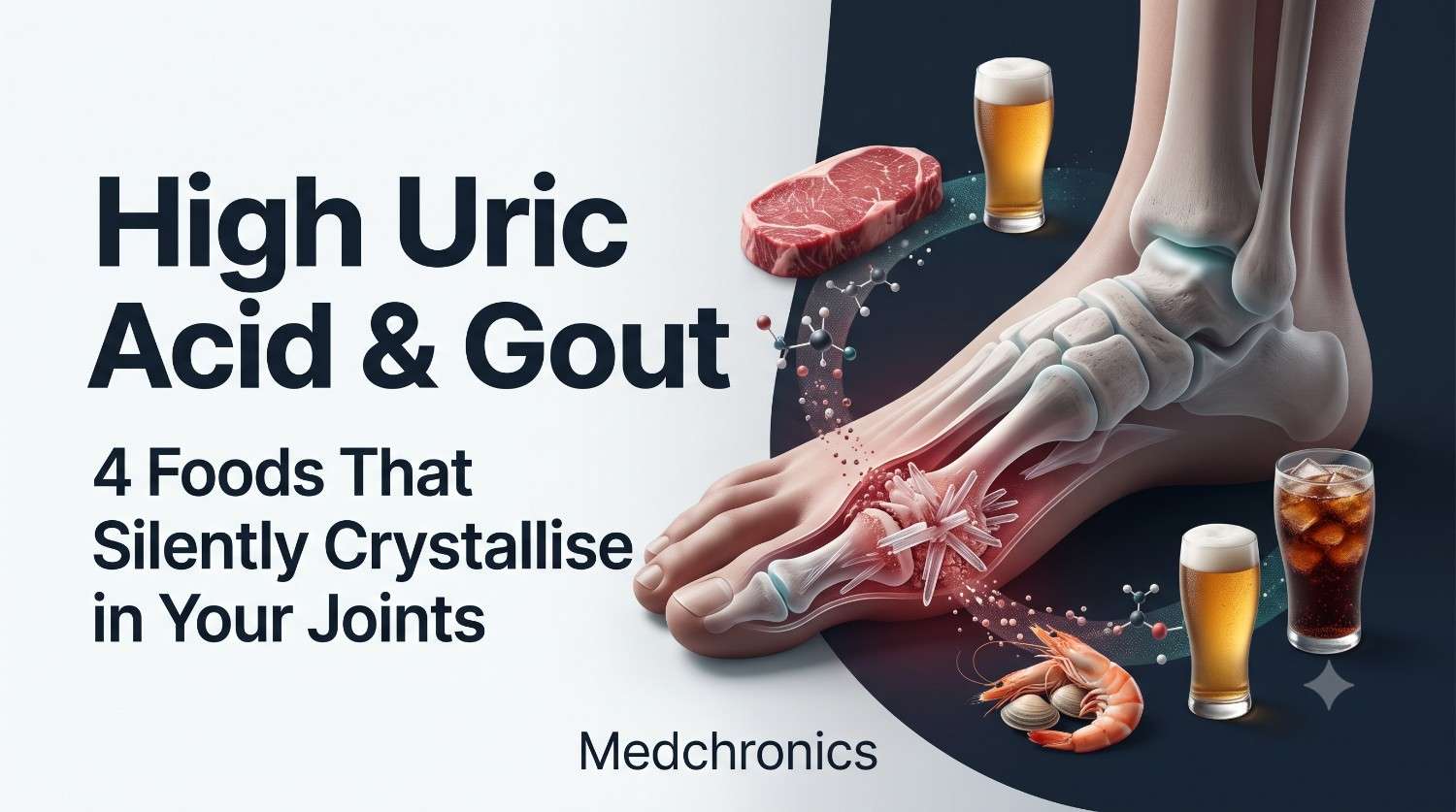
High Uric Acid Foods: Did you know that a sudden, excruciating pain in your big toe or ankle in the middle of the night might have nothing to do with a physical injury? The real danger is often a silent chemical buildup happening inside your bloodstream. If you ignore high uric acid levels, those excess waste products can turn into sharp, needle-like crystals that settle right inside your joint spaces.
Managing your health isn’t just about keeping track of basic routines—it is about understanding what happens beneath the surface after every meal. To see how certain everyday foods can trigger severe joint inflammation, we need to take a look inside your body’s filtration system.
Imagine your body is like a big, beautiful, and bustling city. The nutrients from your food are the delivery trucks, the heart is the central power station, and your blood vessels are the highways.
In this city, Uric Acid is a natural waste product created when your body breaks down compounds called purines. Normally, your kidneys act as high-tech water-purification factories, filtering out this waste and flushing it away in your urine without any trouble.
However, when you eat too many high uric acid foods (purine-heavy foods), the filtration factory gets overwhelmed.
To understand what happens next, imagine dissolving table salt in a glass of warm water. If you add a single spoonful, it dissolves completely. But if you keep pouring salt into the glass, the water reaches a point where it simply cannot hold any more. Hard, sharp salt crystals begin settling at the bottom of the glass.
In your body city, when uric acid levels get too high (a condition known as hyperuricemia), the blood becomes saturated. These excess waste molecules travel through your bloodstream and settle in cooler, low-flow areas like your toes, ankles, and knees. They transform into microscopic monosodium urate crystals—literally acting like tiny glass needles stabbing your delicate joint tissues every time you move.
Table of Contents
How Your Kidneys Get Overwhelmed (The Filtration Traffic Jam)
Your kidneys are responsible for filtering hundreds of liters of blood every single day. However, when health conditions overlap, their job becomes significantly harder. High blood sugar, elevated blood pressure, and high uric acid often travel together, placing an enormous strain on your renal system.
When your kidneys are busy managing high sugar traffic or dealing with increased pressure within their microscopic vessels, their efficiency drops. Instead of flushing out uric acid smoothly, the waste backs up into your bloodstream. This sets off a ticking time bomb for sudden, painful gout attacks and long-term joint stiffness.
The 4 Foods That Silently Crystalize in Your Joints
While purines occur naturally in many healthy foods, certain items contain ultra-concentrated levels or chemical triggers that force your body to produce excess waste.
1. Red Meat & Organ Meats (The Purine Heavyweights)
- Why it harms: Meats like mutton, beef, liver, and kidney are packed with dense cell structures containing high levels of purines (high uric acid foods).
- The Reaction: Eating these meats triggers a massive surge of uric acid in your bloodstream within just a few hours. Your kidneys struggle to clear this sudden wave, causing levels to spike well past the safe threshold.
2. Sugary Drinks & High-Fructose Corn Syrup (The Secret Uric Acid Factory)
- Why it harms: Most people assume only savory, high-protein foods cause gout. However, refined fructose—found in sodas, packaged juices, and commercial sweets—is a major hidden culprit.
- The Reaction: Unlike other sugars, fructose consumes cellular energy (ATP) in your liver at an extreme speed. This rapid chemical breakdown generates uric acid directly as a byproduct before your kidneys even have a chance to intervene.
3. Purine-Dense Seafood & Specific Fish Varieties
- Why it harms: Seafood items like prawns, crabs, anchovies, sardines, and mackerel carry some of the highest purine concentrations per gram.
- The Reaction: While fish oils are great for cardiovascular health, regularly eating purine-dense shellfish accelerates crystal formation in peripheral joints where body temperature is slightly lower.
4. Alcohol & Yeast Extracts (The Double Whammy)
- Why it harms: Beer, spirit beverages, and heavy yeast extracts are double threats. Beer is inherently rich in purines, and alcohol produces lactic acid during metabolism.
- The Reaction: Lactic acid and uric acid compete for the same exit doors in your kidneys. Because your body prioritizes clearing alcohol waste first, uric acid gets trapped in your blood, rapidly crystalizing in your joints.
Food Swap Guide: High Purine vs. Kidney-Safe Choices

How to Flush Out Uric Acid Naturally
You don’t have to wait for a midnight flare-up to start protecting your joints and kidneys. Here are four practical, daily steps to help your body clear out waste efficiently:
- Hydrate Like a Filter: Drink at least 2.5 to 3 liters of water throughout the day. Proper daily fluid intake ensures uric acid stays liquid, making it significantly easier for your renal filters to process and eliminate.
- Incorporate Citrus: Drinking fresh lemon water introduces natural citrates, which help alkalize your urine and prevent uric acid from hardening into crystals or kidney stones.
- Choose Low-Fat Dairy: Milk and yogurt contain unique proteins (casein and lactalbumin) that actively signal your kidneys to excrete more uric acid through your urine.
- Get Tested Annually: Ask your healthcare provider for a simple Serum Uric Acid Test during your routine health checkups to catch rising levels before symptoms start.
Take Control of Your Joint & Kidney Health
A midnight gout attack is a painful wake-up call, but high uric acid can be managed effectively with the right daily habits. By swapping out high-purine triggers, drinking plenty of water, and keeping your kidneys well-supported, you can clear out metabolic waste before it turns into painful joint crystals.
Frequently Asked Questions
Q. What is a normal serum uric acid level?
For adult men, a normal serum uric acid level generally ranges between 3.4 and 7.0 mg/dL. For adult women, it typically falls between 2.4 and 6.0 mg/dL. Levels consistently remaining above 7.0 mg/dL significantly increase your risk of developing gout crystals.
Q. Can high uric acid cause permanent kidney damage?
Yes. Over time, unmanaged uric acid crystals can form painful kidney stones or lodge directly inside renal tissue. This leads to chronic inflammation, scarring, and a gradual decline in overall kidney filtration capacity.
Q. Are eggs and chicken safe to eat if I have high uric acid?
Yes. Eggs are virtually purine-free and serve as an excellent protein source for individuals managing high uric acid. Chicken contains moderate purine levels and can be eaten in controlled portions, making it a much safer alternative than red or organ meats.