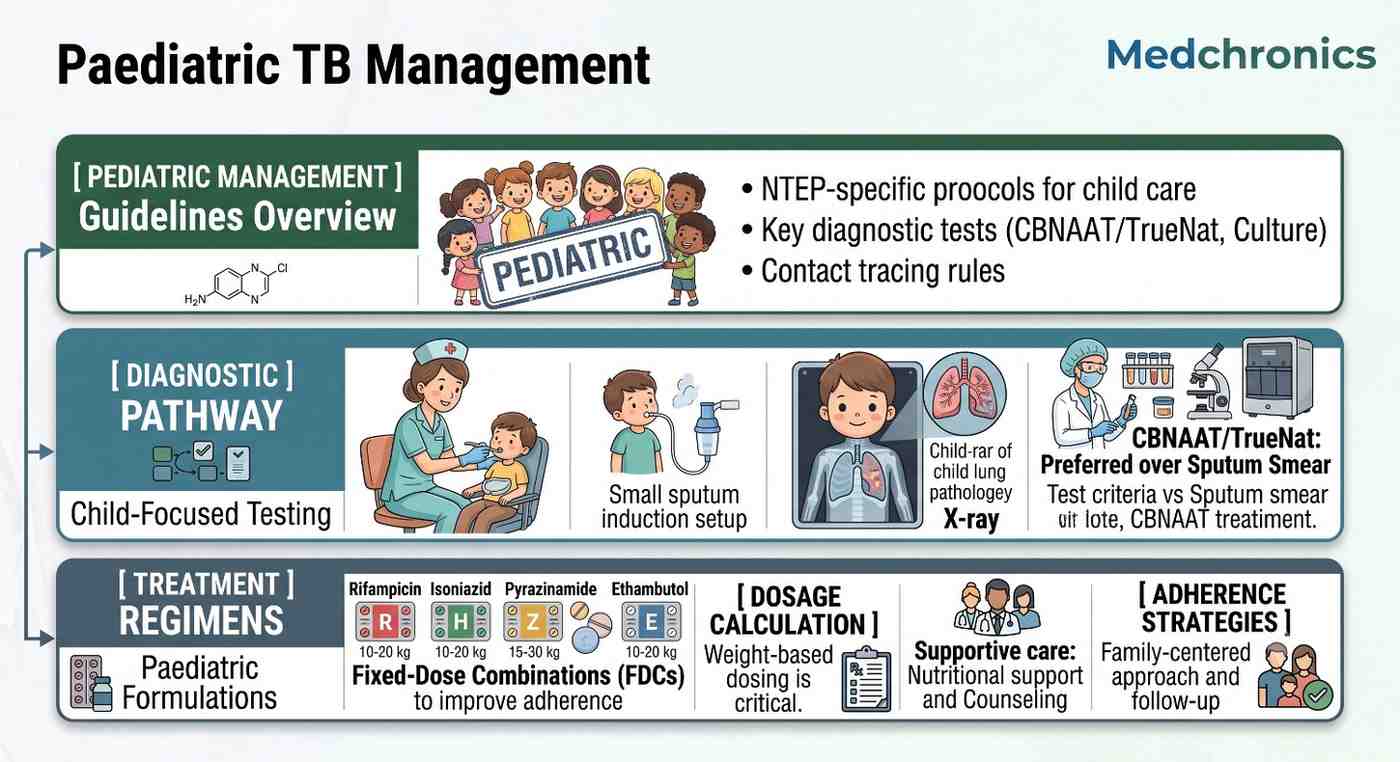
Pediatric TB (Tuberculosis) remains a shocking public health challenge for our youngest populations. When a tiny bacterium enters a child’s body, it starts a complex biological battle. To win this war, the National Tuberculosis Elimination Programme (NTEP) in India updated its structure to ensure early detection, universal drug testing, and highly effective daily treatment combinations.
Appreciative paediatric TB management is crucial for both healthcare professionals who manage these cases clinically and parents tracking their child’s recovery path. Let’s look at the scientific systems and daily care adjustments compulsory to make India completely TB-free.
Table of Contents
1. Recognising the Signs: Presumptive Paediatric TB
Unlike adults, who often cough up obvious sputum samples, younger children tend to swallow their respiratory secretions, making diagnosis a unique puzzle. Healthcare providers must act on clinical indicators immediately when a child shows signs of presumptive (i.e., suspected) TB.
Key Symptoms to Check:
- Unremitting Cough: A persistent cough lasting for more than 2 weeks without signs of improvement.
- Persistent Fever: An unexplained fever running consistently for more than 2 weeks.
- Significant Weight Loss: A documented loss of more than 5% of body weight or hasn’t gained weight in 3 months, even though they’re eating well. Known Exposure History: Close contact with an active, infectious pulmonary TB patient within the past 2 years.
2. The Problem-solving Tools & The U-DST Strategy
Old phlegm tests are now outdated. The primary objective under current protocols is Universal Drug Susceptibility Testing (U-DST), ensuring every child is screened for drug resistance right at the time of diagnosis.
The Diagnostic Toolkit:
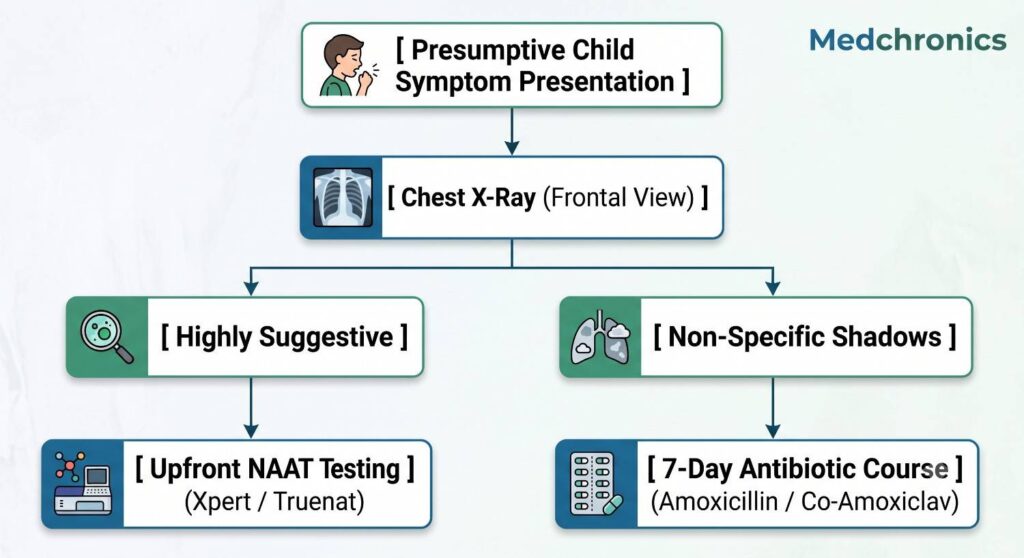
- 1. Frontal Chest X-Ray: The initial sorting tool. Highly suggestive patterns include miliary shadows (looking like a dense snowstorm across the lungs) or enlarged hilar lymph nodes.
- 2. Upfront Molecular Testing (NAAT): Using platforms like Xpert MTB/RIF or Truenat, these automated tests detect mycobacterial DNA and immediately reveal whether the strain is sensitive or resistant to Rifampicin within a couple of hours.
- 3. Alternative Specimen Extraction: For children who cannot produce sputum voluntarily, clinicians rely on specialised techniques like Gastric Aspirate (GA) collected early morning on an empty stomach or Induced Sputum (IS) provoked using nebulised 3% hypertonic saline.
3. Treatment Regimen for Rifampicin-Sensitive TB
Once molecular testing confirms the absence of Rifampicin resistance, the patient is placed on standard first-line daily therapy. To make paediatric TB management highly reliable and reduce the risk of missed single doses, the program relies entirely on child-friendly Fixed-Drug Combinations (FDCs). These are dispersible, flavored tablets designed to dissolve cleanly in water.
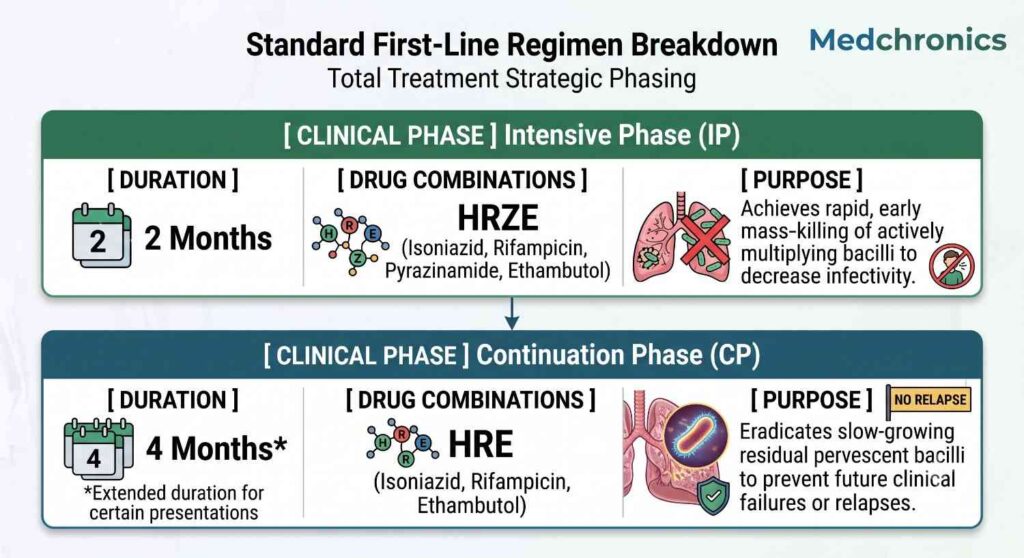
Note: For complex neurological presentations like TB Meningitis or Spinal TB, the Continuation Phase is aggressively extended to 10 months to safeguard critical organ structures.
Why Ethambutol is in the Continuation Phase
Due to a high baseline level of background Isoniazid (INH) resistance in the community, Ethambutol is carried through as a vital companion drug during the continuation phase to prevent the amplification of multi-drug resistance.
4. Navigating Drug-Resistant TB (DR-TB) Regimens
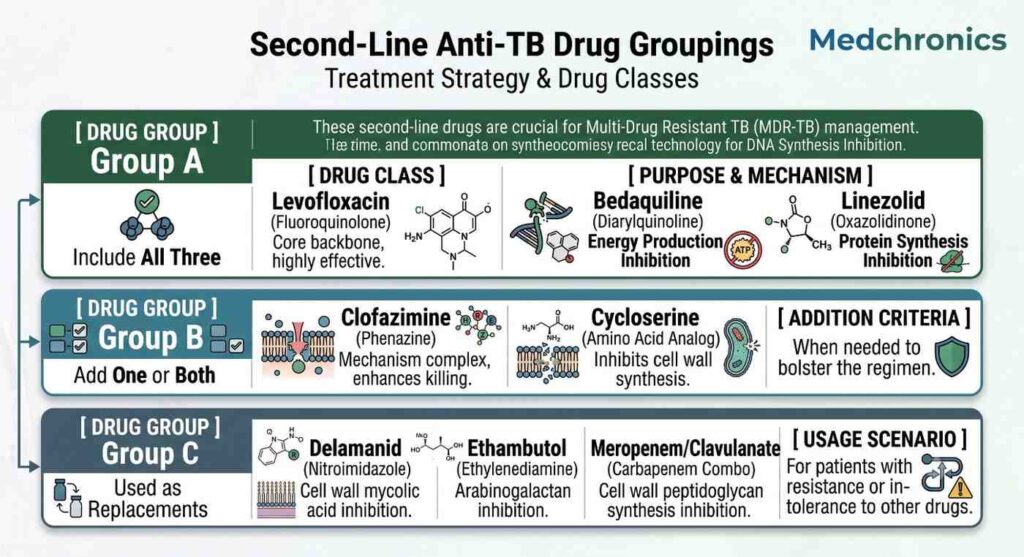
If molecular tests indicate drug mutations, paediatric TB management pivots immediately to specialized second-line protocols formulated by expert clinical panels. Regimens are classified meticulously by the precise genetic resistance pattern identified:
- Isoniazid Mono or Poly Resistance (Hr-TB): Cured via a daily (6) Lfx-R-E-Z regimen, completely avoiding regular INH while adding Levofloxacin for 6 to 9 continuous months.
- Shorter Oral Bedaquiline Regimen: Appropriate for children 5 years old and weighing at least 15 kg, provided they do not present with extensive cavitary lung destruction or severe extrapulmonary disease. This completely oral regimen runs for 9–11 months using Levofloxacin, Clofazimine, Pyrazinamide, Ethambutol, High-dose INH, Ethionamide, and Bedaquiline.
- Longer Oral M/XDR-TB Regimen: Kept for highly compound-resistant patterns or when shorter choices fail. It extends to 18–20 months using an optimised group configuration of high-efficacy medications like Bedaquiline, Linezolid, Clofazimine, and Cycloserine.
5. Adherence Monitoring & Vital Supportive Care
Successful paediatric TB management goes beyond simply swallowing pills; it requires rigorous monthly growth and toxicity checks.
- Concurrent Surveillance via Nikshay: Every diagnosed child is registered on Nikshay, India’s unified web-surveillance platform. This platform tracks real-time progress, monitors treatment completion, and facilitates Nikshay Poshan Yojana direct cash transfers to ensure nutritional support throughout the treatment duration. The Prophylactic Role of Pyridoxine (Vitamin B6): High doses of daily Isoniazid can severely upset vitamin metabolism, causing irreversible peripheral neuropathy (nerve pain and limb numbness). To prevent this, the national TB program requires all children on treatment to take a daily 10 mg vitamin B6 supplement.
- Weight-Based Dose Escalation: As a child heals, their appetite recovers, and they gain weight rapidly. Clinicians must review weight records monthly and scale the medication dosages upward as the child crosses into a higher weight band to avoid sub-therapeutic under-dosing.
Clinical Warning: Empirical prescription of anti-TB medications without sincere molecular verification is highly disheartened. Always confirm that a cartridge- or chip-based molecular test is processed to confirm the baseline drug susceptibility profile before initiating therapy.
Frequently Asked Questions
Q: Can the standard first-line daily treatment combination be adjusted if a child vomits frequently?
Minor side effects like mild stomach irritation or taste issues can be managed using temporary antiemetics or stomach-soothing agents. However, if severe persistent vomiting, dark urine, or yellowish eyes appear, it could signify drug-induced hepatotoxicity (liver injury). You must stop the drugs immediately and consult your linked provider for an urgent liver function test (LFT).
Q: What happens if a family accidentally misses a child’s doses for a week?
Short drug interruptions under four weeks are managed by safely extending the overall duration of the phase to ensure every single pill in the box is fully consumed. However, if the interruption stretches beyond four consecutive weeks, the child must immediately undergo fresh molecular tracking via NAAT to check if a drug-resistant strain has developed before treatment can be restarted safely.