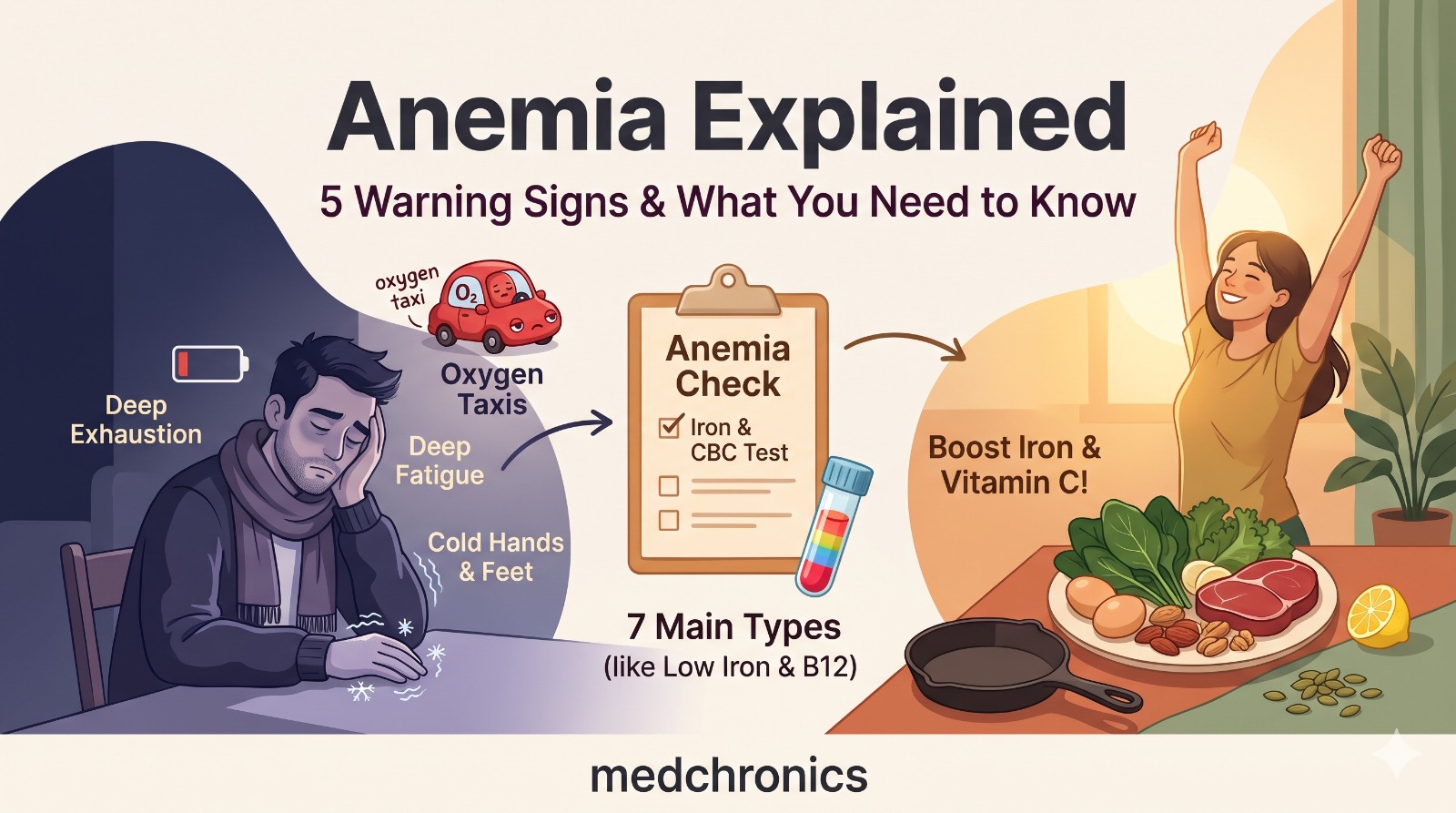
Think about how your smartphone behaves when the battery drops below 5%. And the screen dims, apps take a long time to open and then it just stops.
Now, imagine your body running on that exact same 5% battery, but no matter how much you sleep, you can never seem to recharge. This deep, frustrating energy drain is exactly what happens when you have a condition called anemia.
If you are constantly tired, dizzy, or feeling completely burned out, your body is trying to send you an urgent message. Today, we are getting anemia explained in the simplest way possible. We will cover the silent warning signs, the different types, and exactly what you need to do to finally get your energy back.
Table of Contents
What is Anemia? (The Simple Science)
To understand this condition, you need to meet the hardest workers in your body: your red blood cells.
Think of your red blood cells as tiny “oxygen taxis.” Their only job is to pick up fresh oxygen from your lungs and drive it all the way to your brain, heart, and muscles. To build the seats inside these taxis, your body uses a special protein called hemoglobin.
When you do not have enough hemoglobin, the oxygen has nowhere to sit. When you don’t have enough RBCs, you do not have enough taxis on the road.
When your brain and muscles are deprived of oxygen, your entire body slows down to save power. This shortage of healthy red blood cells—and the crushing fatigue that comes with it- is what doctors call anemia.
5 Warning Signs Your Body is Running Low on Oxygen
Because the body is incredibly good at adapting, anemia often sneaks up on you over several months. Here are the top five warning signs that your oxygen taxis are breaking down.
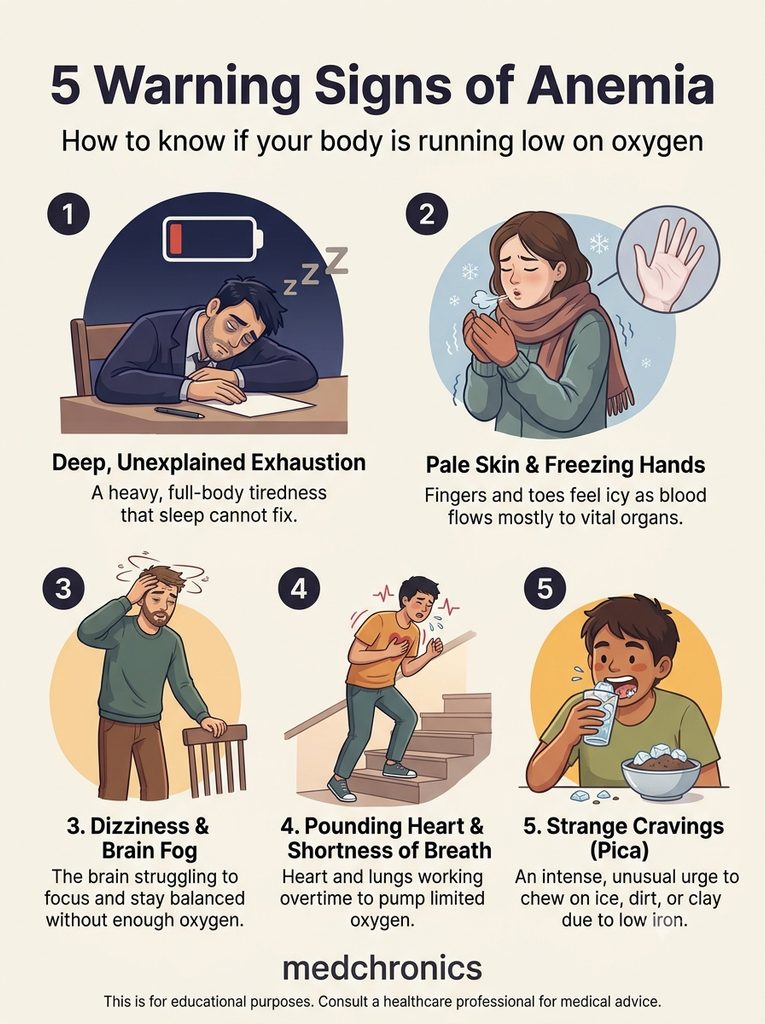
1. Deep, Unexplained Exhaustion
This is not the normal tiredness you feel after a long day at the office. Anemia causes a heavy, full-body exhaustion that makes getting out of bed feel impossible. Because your muscles are starving for oxygen, they physically cannot produce normal energy.
2. Pale Skin and Freezing Hands
When oxygen is running low, your brain becomes highly protective. It redirects all the available oxygen to your most important organs (like your heart) and ignores your skin, fingers, and toes. This leaves your hands feeling like ice cubes and drains the healthy, pink color right out of your face and gums.
3. Dizziness When Standing Up
Your brain requires a massive, steady supply of oxygen to keep you balanced and focused. When anemia reduces that supply, standing up too quickly can make the room spin. You might also experience constant “brain fog,” making it hard to remember simple things or concentrate on your work.
4. A Pounding Heart and Shortness of Breath
If you have fewer red blood cells, your heart has to pump twice as fast to move whatever little oxygen you have left. This means walking up a simple flight of stairs might leave your heart pounding wildly and leave you gasping for air.
5. Strange Cravings (Ice or Dirt)
When your body is desperately low on minerals, it can trigger a strange condition known as Pica. Pica makes your brain crave non-food items. If you find yourself urgently wanting to chew on ice cubes all day, your body is sounding the alarm for more nutrients.
The Main Types of Anemia
Anemia is not just one single disease. There are actually several different types, depending on exactly why your oxygen taxis are breaking down.
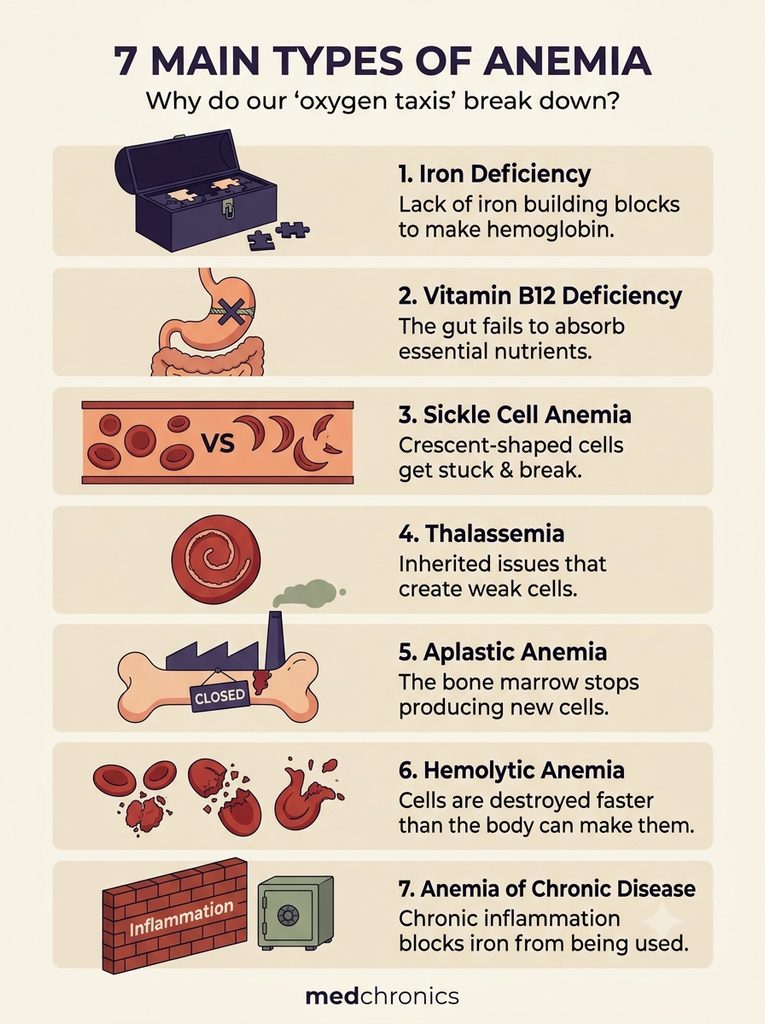
Here are the 7 most common types you need to know about:
1. Iron-Deficiency Anemia: The most common type in the world. Your body simply does not have enough raw iron to build hemoglobin.
2. Vitamin B12 Deficiency (Pernicious) Anemia: Even if you eat enough iron, your body cannot absorb it without Vitamin B12. This often happens if your digestive system is damaged or if you follow a strict vegan diet without supplementation.
3. Sickle Cell Anemia: A genetic condition where the red blood cells are shaped like crescent moons (sickles) instead of round circles. These awkward shapes get stuck in blood vessels and break down too quickly.
4. Thalassemia: Another inherited genetic disorder where the body makes an abnormal form of hemoglobin, leading to the rapid destruction of red blood cells.
5. Aplastic Anemia: A rare but serious condition where your bone marrow (the factory that builds your blood cells) simply stops producing enough new red blood cells.
6. Hemolytic Anemia: A condition where your red blood cells are destroyed faster than your bone marrow can replace them. Sometimes, your own immune system mistakenly attacks them.
7. Anemia of Chronic Disease: Chronic, long-term illnesses (like kidney disease, rheumatoid arthritis, or severe infections) can cause massive inflammation. This inflammation blocks your body from using its stored iron to make healthy blood cells.
What Actually Causes Anemia?
If you are dealing with the most common forms of this condition (Iron or B12 deficiency), it usually comes down to three root causes:
- A Lack of Nutrients: You are simply not eating enough iron-rich or B12-rich foods to keep your blood factories running.
- Hidden Blood Loss: If you are losing blood, you are losing iron. This is very common for women with heavy menstrual periods or people suffering from hidden stomach ulcers.
- Poor Digestion (Leaky Gut): If your stomach lining is inflamed or damaged, your body cannot absorb the iron you eat. Your food just passes right through you. (Learn more about fixing your digestion in our complete guide to Gut Health).
How to Naturally Recover Your Energy
If your anemia is caused by a poor diet or low iron, the fix is highly actionable. You just need to restock your body’s building materials!
First, focus on eating Heme Iron, which is found in animal products like lean red meat, chicken, and eggs. Your body absorbs this type of iron very easily. If you prefer plants, eat Non-Heme Iron found in dark leafy greens, lentils, and pumpkin seeds.
To make sure your body actually absorbs that plant-based iron, you must pair it with Vitamin C. Squeezing fresh lemon juice over your spinach salad acts like a key, unlocking the iron so it can enter your bloodstream.
Finally, keep your coffee and black tea far away from your meals. The compounds in these drinks act like a shield, completely blocking your stomach from absorbing iron. Wait at least one full hour after eating before you enjoy your morning coffee.
When to See a Doctor (Diagnosis & Blood Tests)
You should never try to self-diagnose anemia. If you have been feeling deeply exhausted, freezing, or dizzy, schedule an appointment with your doctor right away.
They will perform a simple, painless blood test called a CBC (Complete Blood Count). This test will count exactly how many “oxygen taxis” you have on the road. Based on those numbers, your doctor might prescribe a high-quality iron or B12 supplement to speed up your recovery.
Rebuilding your blood supply takes time, but by catching the warning signs early and fueling your body with the right nutrients, you can finally turn your battery back up to 100%.
Frequently Asked Questions
Q: Can anemia go away on its own?
Your body cannot magically create new iron out of nothing. To fix anemia, you have to give your body the right building blocks (like iron and Vitamin C) or stop the hidden blood loss. It will not cure itself without a change in your diet, digestion, or medication.
Q: What is the fastest way to raise my iron levels?
The quickest natural fix is eating “heme iron” found in animal products like lean red meat or chicken, because your body absorbs it instantly. If you rely on plant-based iron like spinach or lentils, you must add Vitamin C (like a squeeze of lemon juice) to unlock the nutrients so your stomach can actually use them.
Q: Can drinking more water cure anemia?
Staying hydrated helps your blood flow smoothly and keeps you feeling awake, but water does not contain iron or Vitamin B12. Because of this, drinking water alone cannot build new red blood cells or cure anemia.
Q: Does stress cause low iron?
Stress does not directly drain your iron levels. However, chronic stress can damage your digestion over time. When your stomach is inflamed from stress, it struggles to absorb the iron from your food, which can eventually lead to a deficiency.
Q: Is it safe to exercise when my oxygen is low?
Light exercise like walking or gentle stretching is safe and helps your blood circulate. However, you should avoid heavy weightlifting or intense running until your iron levels are back to normal. Your heart is already working overtime to pump oxygen, so pushing it too hard can cause severe dizziness.