Good gut health is the hidden engine behind your daily energy, sharp focus, and strong immune defense. Most people only consider their digestive tract when dealing with painful heartburn, indigestion, or heavy bloating after a large meal. However, your digestive system does far more than break down the food on your plate. It serves as an active control center that regulates mood, clears skin, balances hormones, and protects against foreign pathogens.
When your internal balance breaks down, silent damage begins weeks or months before severe symptoms appear. Understanding how this system functions allows you to identify early distress signals, repair damage naturally, and maintain sustained vitality.
Table of Contents
What It Is and Why It Matters
Understanding gut health begins with the trillions of bacteria, fungi, and microbes residing in your digestive tract, collectively known as the gut microbiome. These microorganisms are not harmful invaders; they are essential biological partners. They break down complex dietary fibers, synthesize critical B vitamins, and produce vitamin K.
Medical professionals frequently refer to the digestive system as the body’s “second brain.” The gut and the central nervous system communicate continuously through the vagus nerve along a pathway called the gut-brain axis. Roughly 90% of the body’s serotonin—a neurotransmitter responsible for mood stability, emotional balance, and sleep quality—is produced directly in the gut. When your internal microbiome thrives, mental clarity remains sharp and emotions stay balanced.
Furthermore, more than 70% of the human immune system lives along the intestinal lining, which means your gut health directly protects you from daily infections. Specialized tissue called gut-associated lymphoid tissue (GALT) monitors everything entering your body, deciding whether to absorb nutrients peacefully or launch an active immune response against harmful bacteria.
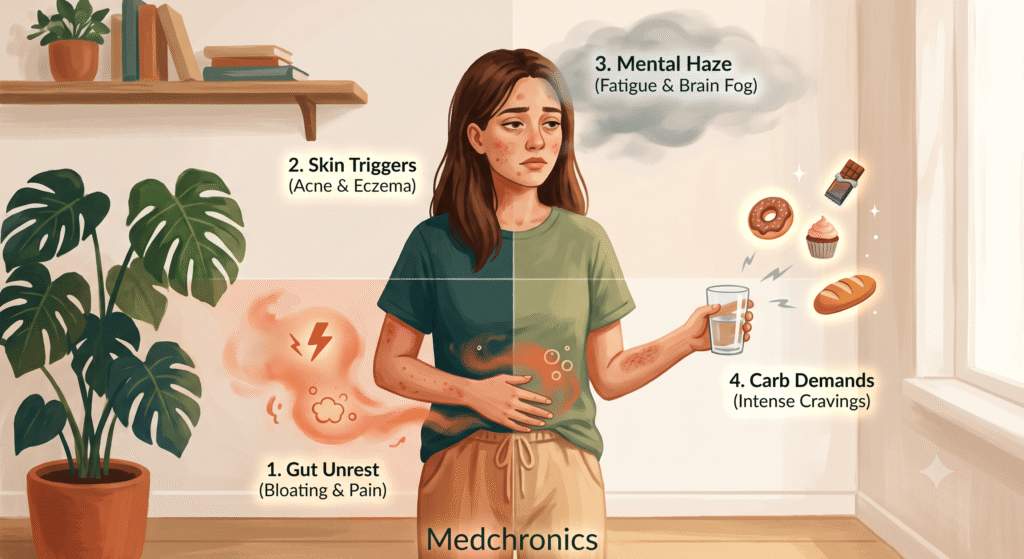
4 Silent Warning Signs of Digestive Imbalance
When your gut health declines, your body provides clear signals that are frequently mistaken for everyday fatigue or normal aging.
- Persistent Digestive Discomfort: Experiencing daily bloating, trapped gas, abdominal cramping, or alternating bouts of constipation and loose stools indicates microbial dysbiosis, where opportunistic bacteria outnumber beneficial strains.
- Unexplained Skin Irritations: The gut and skin share an intimate metabolic connection. When the intestinal lining becomes irritated or hyperpermeable, metabolic waste can enter the bloodstream. This triggers systemic inflammation that manifests externally as acne, eczema, rosacea, or patchy dry skin. Chronic skin complaints are often a direct reflection of poor gut health.
- Chronic Fatigue and Brain Fog: Sleeping for eight hours yet waking up exhausted and struggling to concentrate often points to poor nutrient absorption. An inflamed gut cannot absorb iron, vitamin B12, and magnesium efficiently, depriving your cells of essential cellular fuel.
- Intense Sugar and Carbohydrate Cravings: Harmful bacteria and yeast species feed primarily on simple sugars. When these microbes overgrow, they produce chemical signals that stimulate cravings for processed sweets and refined carbohydrates to ensure their own survival.
Daily Habits That Cause Silent Damage
Everyday routines can quietly degrade your gut health long before you feel sharp stomach pain. Identifying these daily triggers is the first step toward lasting recovery:
- Medication Overuse: Broad-spectrum antibiotics kill beneficial microbes alongside harmful pathogens, often taking months to recover without targeted care. Regular reliance on non-steroidal anti-inflammatory drugs (NSAIDs) like ibuprofen can wear away the stomach’s protective lining, while long-term acid-blocking medications lower stomach acid so much that bacteria bypass natural sterilization barriers.
- Diets High in Ultra-Processed Foods: Diets full of industrial seed oils, refined sugars, and artificial preservatives starve beneficial microbes. Chemical emulsifiers used in packaged foods thin out the protective mucosal wall, leaving intestinal tissue exposed to irritation.
- Chronic Mental Stress and Disrupted Sleep: High cortisol levels reduce blood supply to the digestive organs, slow down enzymatic breakdown, and weaken the gut barrier. Irregular sleep schedules disrupt the natural circadian rhythm of your microbiome, halting nightly tissue repair.
The Role of Water in Digestive Health
Maintaining optimal gut health requires steady, clean hydration. Water is often the most overlooked component of gut recovery.
The interior of your digestive tract is coated with a delicate mucosal barrier that protects intestinal walls from acidic digestive juices and harmful microbes. Water is the primary component of this protective layer. When you become dehydrated, this mucus barrier thins, leaving the gut lining vulnerable to irritation and micro-tears.
Adequate hydration is equally necessary for regular bowel motility. Water combines with dietary soluble fiber to soften stool, allowing waste to move through the colon smoothly and preventing chronic constipation. Proper hydration also helps digestive enzymes dissolve vitamins and minerals so they pass cleanly into the bloodstream. Drinking 2 to 3 liters of plain water daily is an essential foundation for protecting your digestive system from silent decline.
5 Natural Steps to Restore Your Gut Health
Restoring your internal balance does not require expensive detox kits or complicated regimens. Focus on these simple, science-backed lifestyle habits:
- Add Prebiotic Fiber: Prebiotics serve as fuel for your beneficial bacteria. Eat whole foods such as oats, garlic, onions, leeks, apples, and lentils. When your microbes ferment this fiber, they create short-chain fatty acids (SCFAs) like butyrate, which strengthen the intestinal wall.
- Eat Natural Fermented Foods: Introduce active, beneficial bacteria to your digestive system through real food sources. Fresh unsweetened curd, yoghurt, kefir, traditional sauerkraut, and kimchi provide diverse bacterial strains that help balance the microbiome.
- Chew Food Thoroughly: Digestion starts in the mouth. Chewing each bite until liquid mixes food with salivary amylase, breaking down starches early and reducing the mechanical strain placed on your stomach and small intestine.
- Lower Daily Stress Levels: Activating the parasympathetic “rest and digest” nervous system allows digestive blood flow to normalize. Practice 5 to 10 minutes of slow, deep breathing before meals, take brief walks outdoors, and avoid working while eating.
- Protect Your Sleep Routine: Aim for 7 to 8 hours of quality sleep each night. Your intestinal lining undergoes cellular turnover and repair while you rest, keeping the digestive barrier resilient against daily wear and tear.
When to Consult a Physician
While dietary adjustments and hydration resolve most mild digestive imbalances, certain symptoms demand formal clinical evaluation. You should consult a physician promptly if you notice:
- Unintentional, rapid weight loss without changes in your diet.
- Severe or persistent abdominal pain that wakes you from sleep.
- Blood in your stool or unusually dark, black bowel movements.
- Diarrhea or vomiting that lasts longer than two weeks.
- Persistent difficulty swallowing or feeling full after only a few bites of food.
A doctor can perform specific medical assessments—including comprehensive stool profiles, celiac serology, SIBO breath tests, or an endoscopy—to identify underlying medical conditions when symptoms go beyond standard changes in gut health.
Taking small, daily steps to care for your gut health creates lifelong vitality, sharp mental focus, and strong disease resistance. Begin with practical changes today: drink adequate clean water, add wholesome fiber to your plate, and give your body the rest it needs to repair naturally.
Frequently Asked Questions
Q. How long does it take to heal gut health naturally?
Noticeable improvements in bloating and energy often appear within 2 to 4 weeks of eating prebiotic fibers, hydrating properly, and cutting out processed foods. Full restoration of the gut microbiome and intestinal lining typically takes 2 to 6 months of consistent daily habits.
Q. What is the difference between prebiotics and probiotics?
Probiotics are live, beneficial bacteria found in fermented foods like curd, yogurt, and kefir. Prebiotics are non-digestible plant fibers—found in garlic, onions, oats, and bananas—that serve as the primary fuel source for those good bacteria.
Q. How does poor gut health cause acne and skin flare-ups?
When the intestinal wall becomes irritated and porous, metabolic waste leaks into the bloodstream. This triggers systemic inflammation throughout the body, which frequently breaks out on the skin as adult acne, eczema, or dry, patchy rashes.
Q. How does drinking water protect gut health?
Water maintains the thick mucosal barrier that shields your intestinal lining from acidic digestive juices and harmful microbes. It also binds with dietary fiber to soften stool, preventing chronic constipation and promoting daily bowel regularity.
Q. What are the red-flag signs that require a doctor’s visit?
Consult a physician immediately if you experience unexplained rapid weight loss, severe abdominal pain that disrupts sleep, blood in the stool (or black stools), or chronic diarrhea lasting longer than two weeks.
1 thought on “Gut Health: Stop Silent Damage and Heal Naturally”