In modern healthcare, AI and Diagnostics work together to stop deadly delays and save lives early. When doctors use it, they can find hidden sickness before it grows into a severe health emergency. This article explains how AI and Diagnostics help find cancer, brain conditions, and rare diseases in simple words that anyone can understand.
Table of Contents
What is AI and Diagnostics?
- The combination of AI and Diagnostics means using smart computer programs to help doctors test for diseases.
- It uses artificial intelligence to look at medical images like X-rays, CT scans, and blood tests.
- Through smart computer learning, AI and Diagnostics studies millions of past medical cases in just a few seconds.
- The goal is not to replace human doctors, but to give doctors a powerful tool to spot illness fast.
- By using this, hospitals can make testing faster, safer, and much more accurate.
How It Detects Early Cancer
Finding cancer early gives patients the best chance to heal completely. AI is making cancer detection faster and more reliable:
- Breast Cancer: It scans mammogram images to find tiny lumps that human eyes might miss.
- Lung Cancer: It checks chest scans for small spots called nodules before they spread.
- Skin Cancer: It looks at photos of skin moles to warn patients about dangerous melanoma in seconds.
- Tissue Tests: It helps lab doctors review biopsy slides to confirm cancer types without delay.
AI and Diagnostics for Brain and Neurological Conditions
Brain disorders often start quietly without obvious signs. It helps uncover these hidden brain changes:
- Alzheimer’s Disease: AI and Diagnostics can spot tiny shrinkage in brain MRI scans years before memory loss begins.
- Emergency Stroke Care: In urgent cases, AI and Diagnostics read brain scans in seconds to show where a blood clot is located.
- Parkinson’s Disease: It tracks tiny changes in a person’s walking style, hand trembling, and voice tone.
- Epilepsy Management: AI and Diagnostics reads brain waves on EEG tests to help predict sudden seizures before they happen.
AI and Diagnostics for Spotting Rare Diseases
Many patients with rare conditions visit dozens of doctors over many years without getting a clear answer. AI changes that long journey:
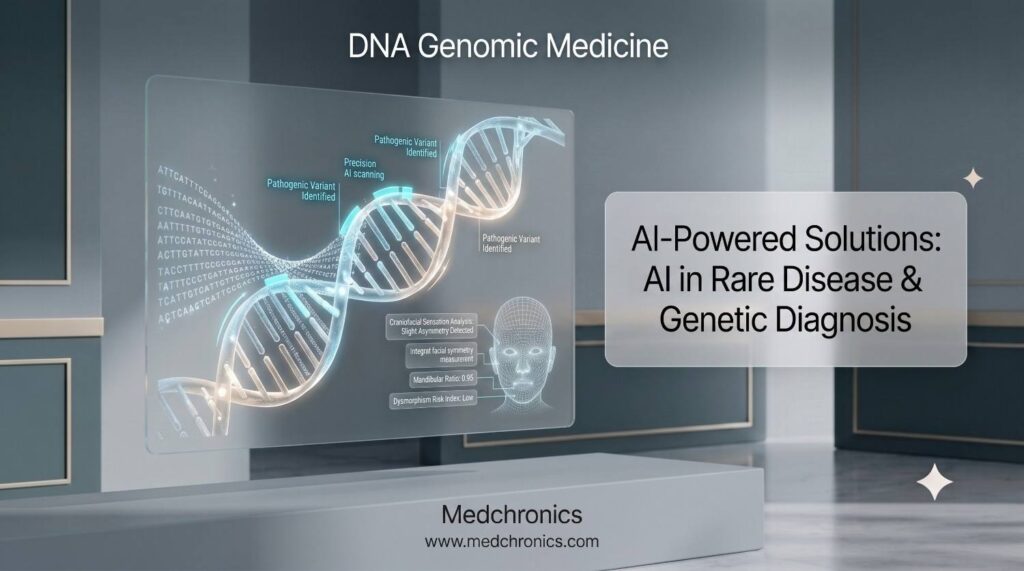
- DNA Testing: It checks billions of genetic codes quickly to pinpoint rare gene mistakes.
- Facial Feature Scans: It can look at facial photo patterns in children to identify rare genetic syndromes.
- Connecting Clues: It connects unusual symptoms across years of hospital visits to identify the right disease.
Why Patients and Doctors Need This
Using AI and Diagnostics brings clear benefits to everyday medical care:
- Fast Test Reports: It delivers instant findings so treatment can start right away.
- Lower Treatment Costs: Catching diseases early through AI and Diagnostics helps patients avoid costly surgeries and late-stage care.
- Helping Busy Doctors: It acts as a tireless helper, reducing mistakes when clinics are crowded.
- Care for Rural Areas: AI and Diagnostics allow small village clinics to get the same high-level test analysis as big city hospitals.
- Personalized Care: AI and Diagnostics helps match the right medicine to each patient’s specific body needs.
Challenges and Limits
Even though it is very powerful, it still has rules and limits to keep in mind:
- Doctor Supervision: Every report from AI and Diagnostics must always be checked and confirmed by a trained human doctor.
- Patient Privacy: Using AI and Diagnostics requires strict safety rules to keep private health records protected from hackers.
- Fair Testing: It must be trained on all types of people so that test results are accurate for every age, gender, and background.
The Future of AI and Diagnostics in Daily Healthcare
The future of AI and Diagnostics is growing brighter every day:
- Soon, it will help smartwatches detect early heart and blood sugar changes at home.
- More hospitals will use it as a regular part of daily lab work.
- As it improves, more diseases will be caught long before patients even feel sick.
Summary: Protecting Health with AI and Diagnostics
In conclusion, it is one of the greatest steps forward in modern medical science. By catching cancer, brain disorders, and rare conditions early, it will stop deadly delays and give patients the gift of time.
Trusting AI and Diagnostics alongside your doctor’s care ensures that illnesses are found early, treated quickly, and managed safely. Embracing AI and Diagnostics today protects your health and builds a safer tomorrow for everyone.
Frequently Asked Questions
Q. Will AI replace human doctors in diagnosing diseases?
No. AI is designed to assist doctors, not replace them. AI works as a high-speed helper that scans tests, flags hidden abnormalities, and provides second opinions. A qualified doctor always reviews the findings and makes the final medical decision.
Q. How does AI help detect cancer before symptoms appear?
AI analyzes mammograms, chest CT scans, and skin photos to detect microscopic changes—such as tiny calcifications or early lung nodules—long before they can be felt or seen clearly. Catching these signs early makes treatment far more effective.
Q. Can AI really help diagnose rare genetic diseases?
Yes. Diagnosing rare diseases usually takes years because symptoms are complex. AI can review vast genetic sequences and link years of patient history in seconds, helping doctors pinpoint rare conditions much faster.
Q. How does AI speed up emergency care for conditions like strokes?
In emergencies where every second counts, AI reviews brain CT scans within seconds to locate blood clots or internal bleeding. This alerts the emergency care team immediately, allowing life-saving treatment to start without delay.
Q. Is patient medical data kept safe and private when using AI?
Yes. Healthcare AI systems operate under strict privacy and data protection standards. Patient information is anonymized and encrypted so that smart diagnostic tools analyze medical scans without exposing private personal details.