
Managing diabetes involves a lot of moving parts—monitoring what you eat, tracking blood sugar numbers, and staying on top of prescriptions. However, there is one crucial area that frequently gets overlooked until a problem arises: your feet.
When you live with diabetes, the way your lower extremities sense pain and recover from minor injuries changes dramatically. A tiny scrape, a small blister, or an unnoticed pebble in your shoe can snowball into a severe medical issue if left unchecked. The good news is that safeguarding your health doesn’t require hours of tedious effort. By understanding how blood sugar influences your nervous system, you can easily protect your feet and preserve your mobility.
Table of Contents
10 Critical Facts About Diabetic Neuropathy
1. It Stems from Prolonged High Blood Sugar
When blood glucose levels remain elevated over extended periods, it changes the consistency of your blood, making it harder to circulate efficiently. This structural strain ultimately damages the delicate network of blood vessels supplying your extremities.
2. Extremities Suffer First
Because your toes and feet are located the furthest from your heart, they bear the brunt of poor circulation. Extended drops in blood flow deprive these distant nerves and tissues of the vital oxygen and nutrients they need to stay healthy.
3. “Neuropathy” Simply Means Nerve Damage
While it sounds intimidating, diabetic neuropathy is just the clinical term for nerves that have become damaged or impaired due to the metabolic effects of diabetes.
4. Numbness is More Dangerous Than Pain
While burning or tingling is incredibly uncomfortable, a total lack of feeling (numbness) is far more hazardous. When you cannot feel pain, you lose your body’s natural warning system.
5. It Delays Your Body’s Healing Response
In a person without diabetes, the body rapidly sends fresh blood to patch up a cut. For those with diabetes, restricted circulation acts like a traffic jam, stalling the delivery of healing cells to the injury site.
6. Minor Scrapes Can Open the Door to Severe Infections
Because wounds heal at a much slower rate, a basic scratch can remain open for weeks. This lingering vulnerability provides an ideal environment for bacteria to enter and trigger deep infections.
7. No Pain Does Not Mean Equal No Problem
One of the biggest misconceptions is assuming your feet are perfectly fine just because they do not hurt. Silent nerve damage means serious tissue breakdown can occur without causing a single shred of discomfort.
8. Water Soaking Does More Harm Than Good
Prolonged foot baths do not hydrate the skin; instead, they strip away defensive natural oils. This causes the skin to dry out and split, creating new entry points for harmful bacteria.
9. Regular Socks Can Be an Unseen Threat
Standard socks often feature tight elastic bands that choke off blood flow, or thick seams that continuously rub against the toes. Specially designed, seamless diabetic socks are a much safer alternative.
10. The Damage is Hard to Reverse, But Highly Manageable
Once deep nerve damage takes hold, completely restoring original function is incredibly difficult. However, you can effectively halt its progression by maintaining target blood sugar levels and practicing diligent daily care.
Symptoms of Diabetic Neuropathy
Nerve damage manifests differently depending on the stage and the individual. The early warning signs in the legs and feet typically include:
- Tingling sensations: A persistent “pins and needles” feeling, similar to a foot falling asleep.
- Temperature distortions: A distinct burning sensation that leaves feet feeling hot, even if they are physically cold to the touch.
- Spontaneous pain: Sudden, sharp, or shooting pains that strike without any clear physical trigger.
- Total numbness: An inability to feel temperature changes, textures, or minor injuries like blisters and cuts.

Note: Many individuals notice that nerve discomfort feels significantly worse at night. When you lie down to sleep, the lack of daytime distractions forces the brain to focus entirely on the faulty nerve signals.
Causes and Risk Factors
The Underlying Causes
The primary catalyst behind diabetic neuropathy is sustained high blood glucose. Over time, this sugar imbalance damages the walls of the tiny blood vessels (capillaries) that supply your nerves. Without a steady stream of nutrients, these nerve fibers weaken or lose their ability to transmit clear signals to the brain.
Key Risk Factors
While anyone with diabetes can develop nerve issues, certain factors increase your vulnerability:
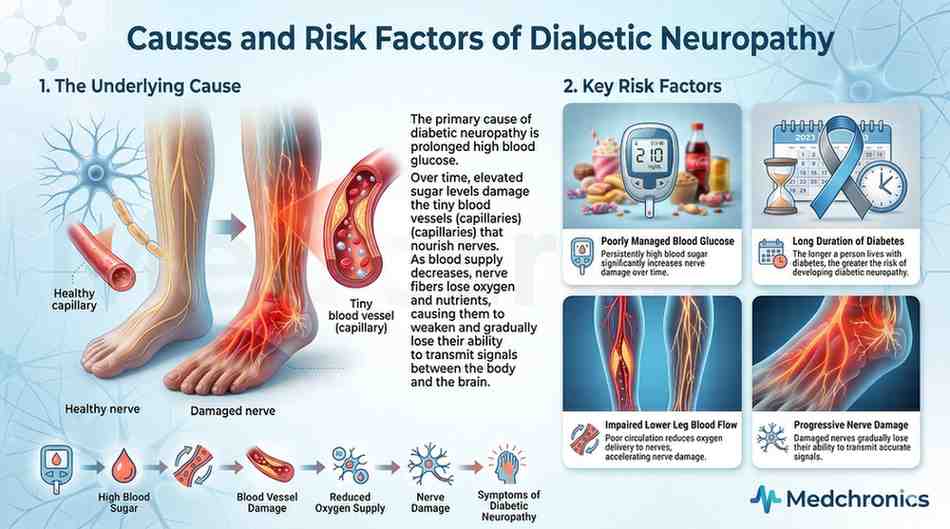
- Poorly managed blood glucose levels over an extended timeframe.
- Extended duration of living with diabetes.
- Impaired lower leg blood flow.
Diagnosis and Treatment Options
How Doctors Diagnose the Condition
For diabetic neuropathy, a primary care doctor or a foot specialist (podiatrist) should perform a comprehensive foot examination at least once a year. If you have an established history of poor circulation or numbness, these check-ups may be stepped up to every 3 to 6 months. Doctors typically test your reflexes, assess sensitivity using a soft monofilament wire, and check the strength of the pulses in your feet.
Treatment and Management Options
While reversing deep nerve damage is rare, you can successfully protect your feet and stay active through targeted management:
- Blood Sugar Stabilization: Keeping your glucose within your safe target zone is the single best way to prevent further nerve deterioration.
- Lifestyle Adjustments: Eating nutrient-dense foods and supporting systemic circulation.
- Professional Podiatric Care: Letting a specialist safely manage corns, calluses, or thick nails rather than attempting dangerous “bathroom surgeries” at home.
Practical Prevention Tips
In diabetic neuropathy, protecting your lower extremities doesn’t take hours of hard work. Implementing a simple, 5-minute daily routine can keep your feet pain-free and healthy.
1. The 2-Minute Visual Inspection
Sit in a well-lit area and thoroughly check the tops, sides, and soles of both feet for diabetic neuropathy. If flexibility is an issue, place a hand mirror on the floor or ask a loved one to check for you. Look out for:
- Redness or localized swelling
- New blisters, cuts, or scratches
- Peeling or unusually dry skin
2. Safe Washing Practices
Wash your feet daily using lukewarm water and a mild soap. Always test the water temperature with your wrist or elbow first—never your feet, as impaired nerves might not recognize a scalding temperature. Clean gently and avoid soaking.
3. Smart Moisturizing
Dry your feet thoroughly with a soft towel, paying close attention to the spaces between your toes. Apply a gentle moisturizing lotion to the tops and bottoms of your feet to prevent cracking. Never apply lotion between your toes, as trapped moisture encourages fungal issues like athlete’s foot.
4. Smart Footwear Choices
Never walk barefoot in diabetic neuropathy, even when relaxing indoors. Stepping on a dropped object, a sharp crumb, or a toy can cause unnoticed cuts. Always wear supportive indoor slippers or shoes.
When shopping for everyday footwear, prioritize these safety features:
| Diabetic Shoe Checklist | Why It Matters |
| Wide Toe Box | Gives your toes plenty of room to move without rubbing. |
| Seamless Interior | Eliminates rough stitching that can cause friction blisters. |
| Breathable Fabrics | Leather or canvas keeps the foot environment dry |
| Adjustable Fasteners | Velcro or laces accommodate natural swelling throughout the day. |
Pro Tip: In diabetic neuropathy, before sliding your feet into your shoes every morning, run your hand inside them. Check for loose insoles, small pebbles, or debris that could rub against your skin during the day.
When to See a Doctor
Catching a minor issue early can mean the difference between a simple bandage and a severe medical crisis. Contact your healthcare provider within 24 hours if you spot an open scratch, blister, or red spot that shows no signs of improvement. Never try to pop blisters or cut off calluses yourself with razor blades or clippers.
Emergency Warning Signs
In diabetic neuropathy, seek urgent medical care immediately if you notice any of the following symptoms on your feet:
- Pus, fluid, or foul-smelling drainage weeping from a wound.
- Redness that is actively expanding outward from an injury.
- Skin around a sore that feels unusually hot or looks heavily swollen.
- Any areas of skin turning dark purple, blue, or black.
Frequently Asked Questions
Q: What exactly is diabetic neuropathy, and how common is it?
Diabetic neuropathy is a type of nerve damage that occurs if you have diabetes. Over time, high blood sugar levels can injure nerve fibers throughout your body, most commonly in your legs and feet. It is incredibly common—studies show that up to 50% of people with diabetes will experience some form of nerve damage during their lifetime.
Q: Why do the symptoms seem to get worse at night?
In diabetic neuropathy, many people notice that burning and tingling intensify when they crawl into bed. This happens for a few reasons:
1. Fewer distractions: During the day, your brain is busy processing sights and sounds, which helps distract you from the pain.
2. Temperature changes: As the room cools down or your feet warm up under blankets, it can trigger damaged, hypersensitive nerve endings.
3. Circulation drops: Your heart rate and blood pressure naturally drop when you rest, slightly reducing blood flow to your extremities.
Q: Can diabetic neuropathy be reversed?
In diabetic neuropathy, strictly speaking, once nerve fibers are destroyed, they cannot be fully restored. However, the progression can be halted, and early damage can be managed effectively. By aggressively managing your blood sugar, improving your diet, and adopting healthy habits, you can prevent further nerve deterioration and significantly reduce your pain.
Q: How does high blood sugar actually cause this nerve damage?
Think of your blood vessels as tiny highways delivering nutrients. Prolonged high blood glucose levels act like a toxic traffic jam—damaging the walls of the tiny capillaries that feed your nerves. When these capillaries narrow or fail, your nerves are starved of oxygen and essential nutrients, causing them to weaken, misfire, or go completely numb.
Q: What are the biggest risk factors besides high blood sugar?
While blood sugar management is number one, your risk increases significantly if you:
– Have had diabetes for a long duration (10–20+ years).
– Smoke (which narrows blood vessels and worsens poor circulation).
– Are overweight or have high blood pressure.
– Have kidney disease, which releases toxins that can further damage nerves.
Q: What is the most dangerous complication of nerve damage?
The loss of sensation (numbness) is ironically the most dangerous symptom. If you cannot feel pain, you might develop a blister, cut, or sore on your foot without realizing it. Left untreated, these minor injuries can easily turn into deep, infected ulcers. Because diabetes also impairs blood circulation, these ulcers heal incredibly slowly, which is why diabetic neuropathy is a leading cause of lower-limb amputations.