Finding ways to protect your body from diabetic foot ulcer is one of the most important parts of living with diabetes. While you might focus a lot on food and blood sugar tracking, international healthcare groups point out that your feet actually need the most daily protection.
Because diabetes can damage your nerves and slow down your blood flow, a small spot of friction can turn into a deep, open sore called a diabetic foot ulcer. These ulcers can take a long time to heal and cause serious infections if they are left untreated.
According to the latest global medical guidelines, almost all foot ulcers can be stopped before they even begin. Here are 10 simple, essential tips to keep your feet completely safe.
Table of Contents
1. Do a 360-Degree Daily Foot Inspection
You cannot always rely on your nerves to tell you if your feet are hurt. Make it a firm habit to check every single part of both feet once a day.
Look closely at the tops, the sides, and the heels. If you cannot bend down easily, place a small makeup mirror on the floor to see the bottom of your feet, or ask someone in your house to check for you. Look for tiny scratches, red spots, or unexpected skin peeling.
2. Never Walk Barefoot (Even Indoors!)
International experts strongly agree on one golden rule: never walk around completely barefoot, in thin slippers, or in plain socks.
If you walk barefoot inside the house, it is very easy to step on a dropped pin, a small piece of dirt, or a pet toy. If your feet are numb from nerve damage, you could walk around with a tiny object stuck in your skin all day without ever noticing it. Always wear a supportive shoe or thick indoor slippers.
3. Wash Daily, but Skip the Long Soaks
Keeping your skin clean keeps dangerous germs away. Wash your feet every single day with warm water and a very gentle soap.
However, do not soak your feet in a tub or bucket of water. Long soaks dry out your skin and make it lose its natural protective barrier, which causes deep, painful cracks to form on your heels.
4. Test the Water Temperature with Your Elbow
Because diabetes can reduce the feeling in your feet, your toes are highly terrible at judging temperature. If you step directly into a hot bath, you could accidentally burn your skin without feeling any pain.
Always test the water temperature using your elbow or your wrist first before letting the water touch your feet. The water should feel comfortably warm, never hot.
5. Dry Thoroughly and Moisturize with Care
In a diabetic foot ulcer, after washing your feet, use a clean, soft towel to pat them dry. Do not rub the skin too hard. Pay extra attention to the spaces right between your toes.
If those tiny gaps stay wet, it creates a perfect breeding ground for fungal infections. Once your feet are dry, apply a gentle lotion to the tops and bottoms of your feet to keep the skin stretchy and crack-free—but never put lotion between your toes.
6. Cut Your Toenails Straight Across
Ingrown toenails are a common cause of serious foot wounds. When you trim your nails, always cut them straight across using a straight-edged nail clipper.
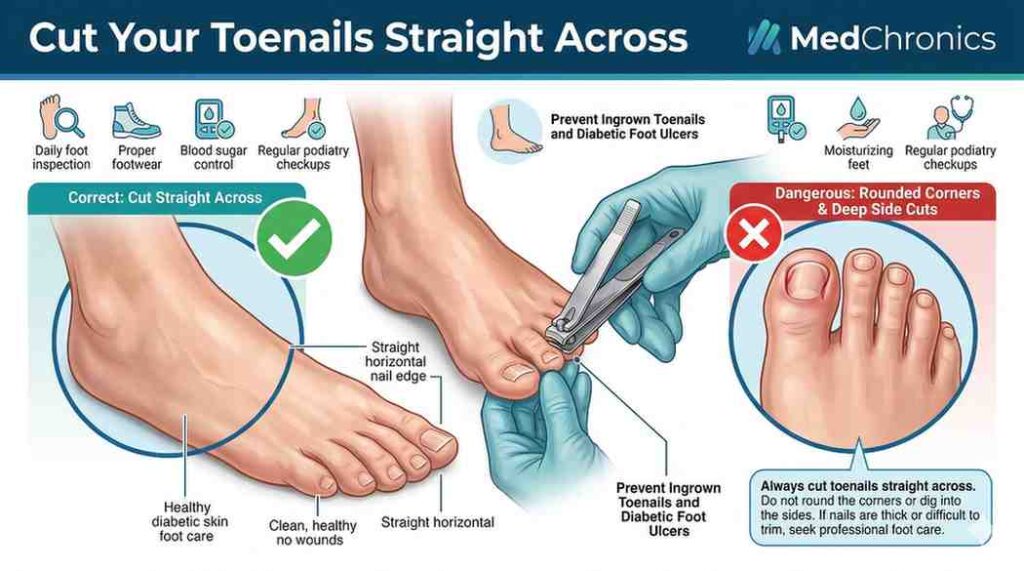
Do not round off the corners or dig deep into the sides of your toes. If your nails are very thick or hard to reach, it is much safer to visit a foot doctor to have them trimmed professionally.
7. Shake Out Your Shoes Before Putting Them On
This is a quick, 5-second habit that can save your feet from serious damage. Before you slide your foot into any shoe, pick it up, turn it upside down, and shake it out.
Slide your hand inside to feel for loose insoles, sharp stitching, pebbles, or small coins. A tiny rock rubbing against a numb foot for a few hours can easily create a deep, infected ulcer.
8. Choose Accommodative, Seamless Footwear
Your shoes should never require a “break-in” period. They should feel completely soft and spacious the exact moment you buy them.
Look for shoes made of soft, breathable fabrics like canvas or leather, and ensure they have a wide toe box so your toes aren’t squeezed together. Avoid high heels, pointed shoes, or shoes with thick, rough internal seams that scrape against your skin.
9. Avoid “Bathroom Surgery” on Calluses
When your feet face uneven pressure, the skin naturally thickens into a hard layer called a callus. A callus acts like a hard stone pushing up into your foot, which can cause bleeding under the skin and lead to an ulcer.
Never try to cut off a callus or a corn yourself using razor blades, scissors, or harsh chemical wart plasters. These tools create deep wounds. Let a professional foot doctor clean them up safely.
10. Schedule a Professional Annual Foot Exam
Even if your feet feel absolutely perfect, you should have them checked by a doctor at least once a year.
During this checkup, your doctor will use a simple, painless tool called a monofilament—which feels like a tiny, flexible plastic wire—to touch your toes and test if you are losing your sense of touch. They will also check your pulses to make sure your feet are getting plenty of healthy blood flow.
Myths vs. Facts
| Myth | Fact |
| If my shoes are too tight, I will easily feel the pain. | Nerve damage blocks pain. You can develop deep blisters from tight shoes without feeling any discomfort at all. |
| I should wear thick socks to help heal an open foot sore. | Open sores need clinical care. Never try to treat an open wound at home with basic socks or standard bandages. See a doctor immediately. |
| Walking a lot is always safe if I hit my daily step goal. | Unprotected steps cause friction. While exercise is great, walking long distances in bad shoes or with a foot deformity can cause excessive pressure ulcers. |
Frequently Asked Questions (FAQs)
Q1: What is the main cause of a diabetic foot ulcer?
The primary cause is a combination of nerve damage (loss of feeling) and poor blood flow. Because you cannot feel the friction, a poorly fitting shoe or a tiny cut rubs against the skin repeatedly until the tissue breaks down into an open sore.
Q2: Can I use over-the-counter heating pads on my diabetic feet?
No, you should never use electric heating pads in diabetic foot ulcer =, hot water bottles, or chemical heat packs on your feet. Because your temperature sensation may be altered, these devices can easily cause severe, deep skin burns before you even realize it.
Q3: How quickly can a diabetic foot ulcer form?
An ulcer can form surprisingly fast—sometimes in just a single day. If a sharp object is trapped in your shoe or if your skin rubs heavily against a rough seam during a long walk, the skin can break open within a matter of hours.
Q4: What should I do if I find a blister or cut on my foot?
Do not try to pop the blister or ignore the cut in a diabetic foot ulcer. Clean the area gently with mild soap and water, apply a thin layer of antibiotic cream, and cover it with a clean, dry bandage. Check it every few hours. If the redness spreads or if it does not look better by the next day, call your doctor immediately.
Q: Why do diabetic foot ulcers take so long to heal?
When your blood sugar levels are high, it makes your blood flow much slower. Because your feet are far away from your heart, they do not get enough fresh oxygen and healing nutrients. High blood sugar also makes it easier for germs to grow, which slows down the body’s natural repair system.
Q: Can I wear open-toed sandals or flip-flops if I have diabetes?
In a diabetic foot ulcer, best to avoid flip-flops, sandals, and shoes that leave your toes or heels uncovered. These types of footwear expose your bare skin to dirty air, pebbles, and sharp objects. They also have straps that can rub against your skin and cause friction blisters without you realising it.
Q: What are the best kinds of socks for people with diabetes?
Look for specialized “diabetic socks.” These are made without thick seams at the toes that could scratch your skin. They also have loose, stretchy tops so they do not pinch your legs and cut off your blood flow. Choose breathable materials like cotton or moisture-wicking fabric to keep your feet dry.