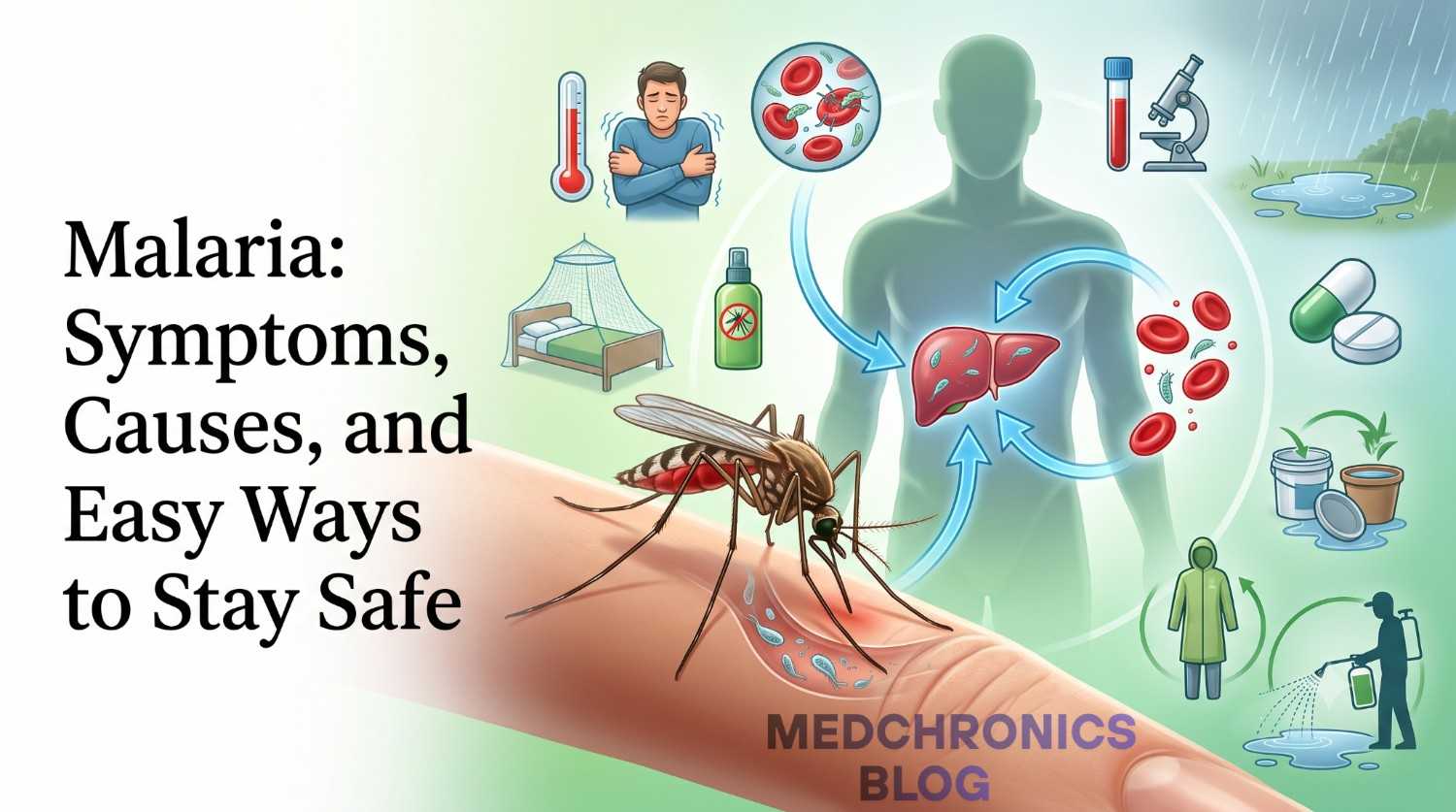
Imagine a tiny, microscopic monster sneaking into your body and hijacking your cells. That is exactly what happens in malaria. While it sounds scary, malaria is completely preventable and curable. Let’s break down the science behind this disease and learn how to defeat it.
What Causes Malaria? (The Biological Hijack)
Bacteria and viruses are not responsible for Malaria. It is caused by a microscopic single-celled parasite called Plasmodium.
The parasite cannot jump into your body on its own. It uses a vector (a carrier), specifically the female Anopheles mosquito.
How the Infection Happens:
- The Bite: When an infected mosquito bites you for a blood meal, it injects the Plasmodium parasites into your bloodstream.
- The Hidden Journey: The parasites travel straight to your liver. They hide there for days, multiplying rapidly.
- The Attack: Once they grow in numbers, they burst out of the liver and attack your Red Blood Cells (RBCs). When these RBCs rupture, you start feeling sick.
Key Symptoms to Watch For
Symptoms usually start showing 10 to 15 days after the mosquito bite. The signs often feel like a severe flu, coming in waves or cycles:
- The Chills (Cold Stage): Shivering uncontrollably with a sudden, high fever.
- The Heat (Hot Stage): Extreme fever, severe headaches, and intense muscle pain.
- The Sweat (Sweating Stage): The fever drops suddenly, leaving you drenched in sweat and feeling completely exhausted.
- Gastrointestinal Distress: Nausea, vomiting, and a total loss of appetite.
How Doctors Detect Malaria (Diagnosis)
You cannot confirm malaria just by looking at the symptoms. Medical verification is required. Doctors rely on two main diagnostic tools:
- Rapid Diagnostic Tests (RDTs): These are quick finger-prick tests. They look for specific proteins (antigens) produced by the parasite and give results in under 20 minutes.
- Peripheral Blood Smear (PBS): A technician looks at a drop of your blood under a microscope. This is the gold standard because it shows the exact Plasmodium species (like P. falciparum or P. vivax), which helps doctors choose the right medicine.
Clinical Treatment & Management
If caught early, malaria is 100% curable. Here is how it is managed:
Antimalarial Drugs: Doctors prescribe specific medications (like Artemisinin-based Combination Therapy or ACT) to target and kill the parasite inside the blood.
Finish the Entire Course: Even if the fever goes away in two days, the parasites might still be hiding in the body. Skipping doses can make the parasite resistant to the medicine.
Fluid Rehabilitation: The body loses a lot of water through sweating and vomiting. Drinking water, coconut water, or Oral Rehydration Salts (ORS) is crucial to protect the kidneys.
5 Simple Ways to Prevent Malaria
The best way to fight malaria is to stop the vector (the mosquito) from breeding and biting.
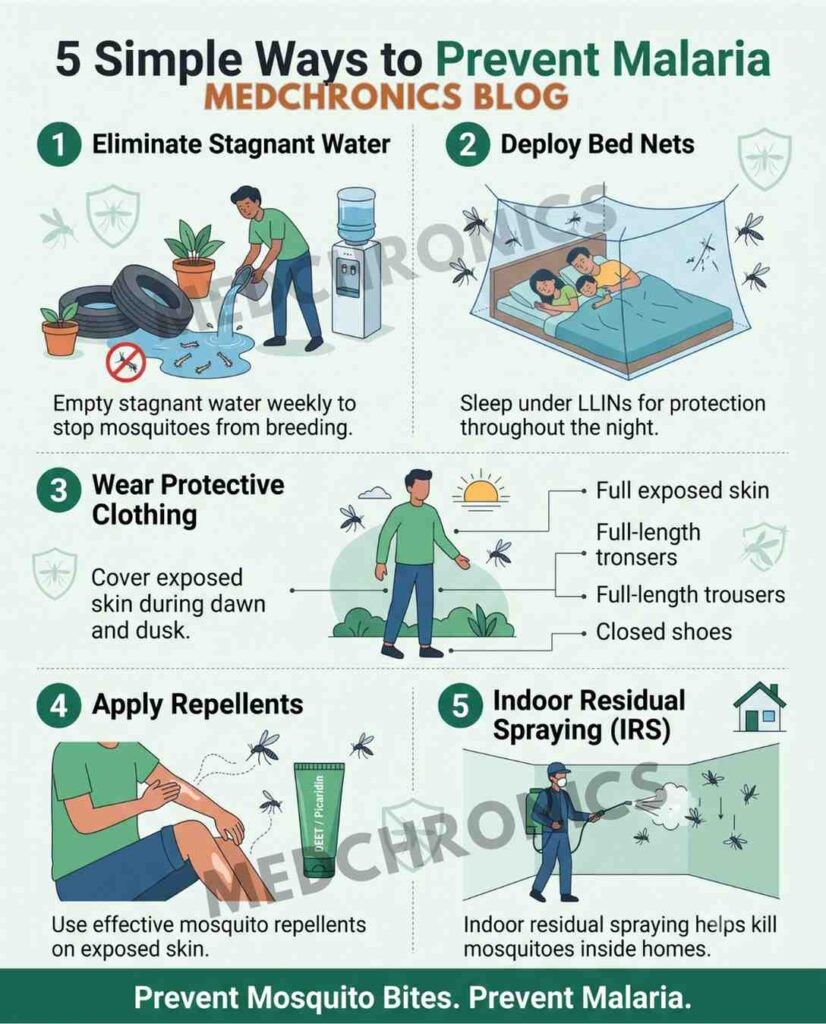
- Eliminate Stagnant Water: Anopheles mosquitoes lay eggs in clean, standing water. Empty out old tyres, flower pots, and coolers weekly.
- Deploy Bed Nets: Sleep under Long-Lasting Insecticidal Nets (LLINs). It forms a physical and chemical shield while you sleep.
- Wear Protective Clothing: When outdoors during dawn and dusk (when these mosquitoes are most active), wear full-sleeved shirts and trousers.
- Apply Repellents: Use mosquito repellent creams containing DEET or Picaridin on exposed skin.
- Indoor Residual Spraying (IRS): Spraying chemical repellents on the walls of the house kills mosquitoes when they rest on them.
Clinical Warning: Never ignore a high fever accompanied by shivering, especially during the monsoon. Do not resort to self-medication; consult a healthcare professional immediately.
Frequently Asked Questions (FAQs)
Q1: Can I catch malaria if an infected person coughs near me?
No. Malaria is not a respiratory disease. It is not contagious through air, touch, or saliva. It absolutely requires a mosquito bite to transfer the parasite.
Q2: Why is the rainy season peak time for malaria?
Rainwater collects easily in puddles and containers, creating the perfect, undisturbed breeding grounds for mosquitoes to multiply.