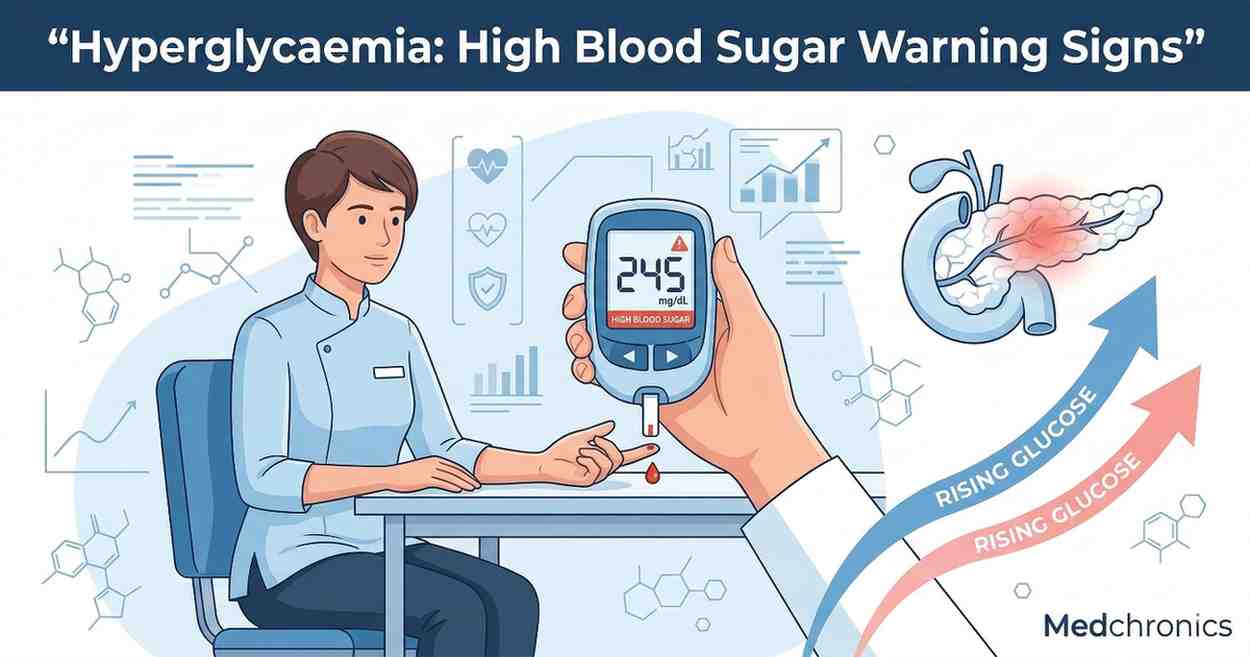
Blood sugar levels constantly rise and fall throughout the day. After eating, glucose increases as the body absorbs nutrients. Later, insulin helps bring those levels back down.
But sometimes, this balance stops working properly.
When blood sugar remains too high for a prolonged period, the condition is called hyperglycaemia, commonly known as high blood sugar. While occasional increases can happen, persistent hyperglycaemia can damage multiple organs and eventually lead to serious complications.
Understanding hyperglycaemia early helps prevent long-term health problems and keeps diabetes under control.
Table of Contents
What Is Hyperglycaemia?
Hyperglycaemia refers to a condition where the level of glucose in the blood rises above the normal range.
The body uses glucose as its primary energy source. It mostly originates from eating carbs. Normally, the hormone insulin, produced by the pancreas, helps move glucose from the bloodstream into the body’s cells, where it can be used for energy.
When insulin is absent, insufficient, or ineffective, glucose begins to accumulate in the blood. This leads to hyperglycaemia. Hyperglycaemia is most commonly associated with diabetes mellitus, but it can also occur temporarily during illness, stress, or certain medications.
Normal vs High Blood Sugar Levels
Understanding normal blood sugar ranges helps recognize when levels become problematic.
Typical glucose levels are:
- Fasting blood sugar (after 8 hours without food):
- 70–99 mg/dL
Two hours after meals:
Less than 140 mg/dL
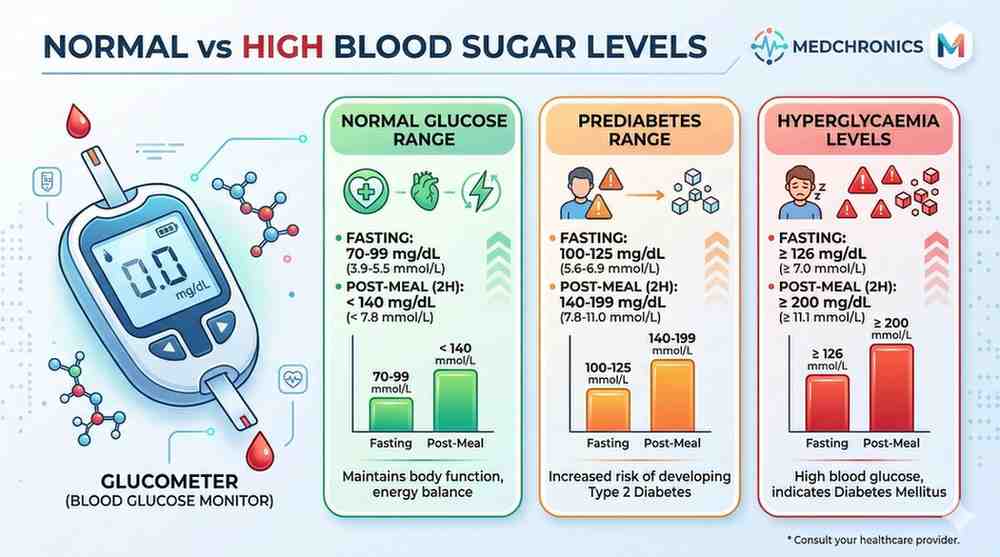
Hyperglycaemia is generally suspected when:
- Fasting glucose is above 126 mg/dL
- Random glucose is above 200 mg/dL
However, values may vary depending on age, medical conditions, and diabetes treatment goals.
How Hyperglycaemia Develops
- To understand hyperglycaemia, it helps to look at what happens inside the body.
- Under normal circumstances, insulin acts like a key that allows glucose to enter cells.
- When insulin does not work effectively, two main things occur:
- First, glucose remains trapped in the bloodstream instead of entering cells.
- Second, the liver starts producing even more glucose, believing the body needs additional energy.
- The result is a continuous rise in blood sugar levels.
- Over time, persistent hyperglycaemia causes damage to blood vessels, nerves, and organs.
Common Causes
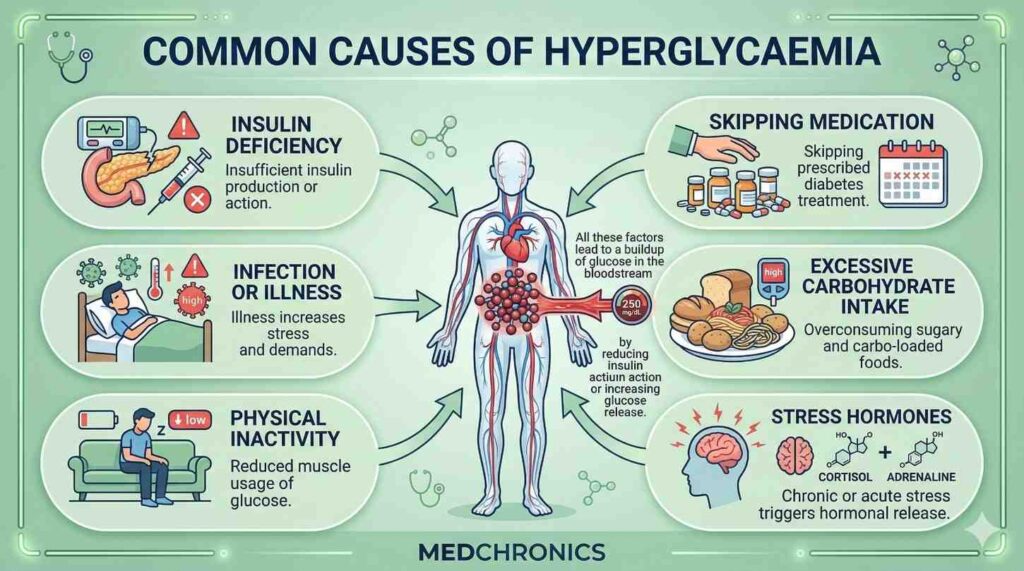
Hyperglycaemia can develop for several reasons.
1. Diabetes Mellitus
The most common cause is diabetes.
The body produces little or no insulin in people with Type 1 diabetes.
The body develops resistance to insulin in Type 2 diabetes.
Elevated blood sugar can result from both illnesses.
2. Skipping Diabetes Medications
Missing insulin injections or oral diabetes medications can quickly raise blood sugar levels.
3. Eating Excess Carbohydrates
Consuming large amounts of sugary foods or refined carbohydrates can temporarily increase blood glucose levels.
4. Illness and Infection
During infections or illness, the body releases stress hormones. These hormones increase glucose production in the liver, often causing blood sugar levels to rise.
5. Physical Inactivity
Exercise helps muscles use glucose efficiently. Lack of physical activity reduces glucose utilization and may contribute to hyperglycaemia.
6. Stress and Hormonal Changes
Emotional stress or hormonal changes can affect insulin sensitivity and glucose metabolism.
Early Warning Signs
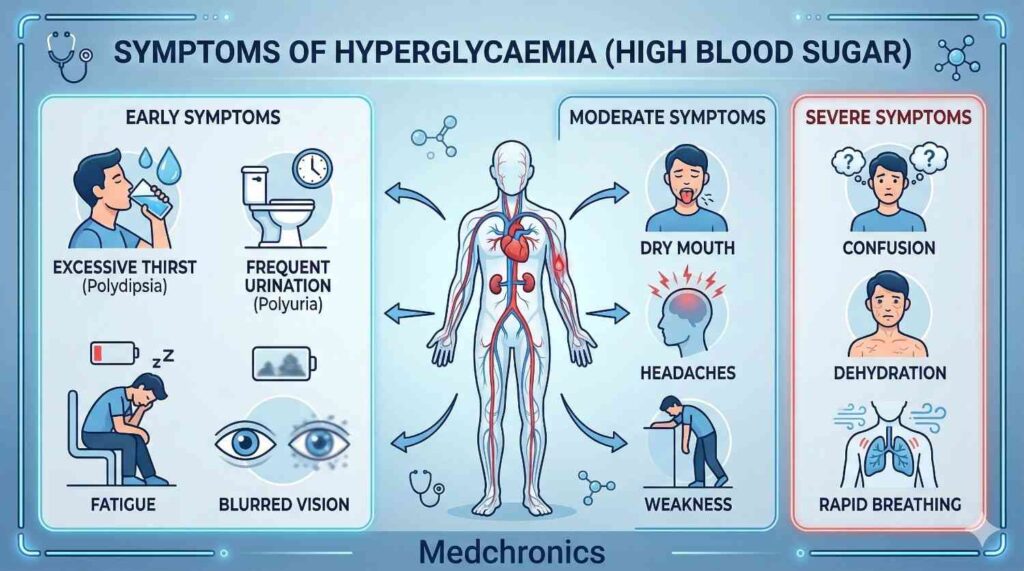
It often develops gradually. Many people may not notice symptoms until blood sugar becomes significantly elevated.
Common symptoms include:
- Excessive thirst
- Frequent urination
- Fatigue
- Blurred vision
- Headache
- Dry mouth
These symptoms occur because the body tries to eliminate excess glucose through urine, which can lead to dehydration.
When Hyperglycaemia Becomes Dangerous
If high blood sugar remains untreated, it can lead to serious complications.
Extremely high glucose levels may result in conditions such as:
- Diabetic ketoacidosis (DKA) is more commonly diagnosed in those with type 1 diabetes.
- Hyperosmolar Hyperglycaemic State (HHS) – more common in Type 2 diabetes
Both conditions require immediate medical treatment.
Signs that hyperglycaemia has become severe include:
- Severe dehydration
- Confusion
- Rapid breathing
- Nausea and vomiting
- Loss of consciousness
Immediate medical care is essential in such situations.
Diagnosis and Monitoring
It is diagnosed using blood glucose tests.
Common diagnostic methods include:
- Fasting blood glucose test
- Random blood glucose test
- Oral glucose tolerance test
- HbA1c test (average blood sugar over three months)
For people with diabetes, regular monitoring using a glucometer or continuous glucose monitoring system (CGM) helps maintain safe glucose levels.
Treatment and Management
Managing it focuses on lowering blood sugar safely and maintaining long-term control.
Treatment approaches may include:
- Medication adjustment
- Insulin therapy
- Dietary changes
- Regular exercise
In severe cases, hospitalization may be required for intravenous fluids and insulin therapy.
The goal is not only to reduce glucose levels but also to prevent future episodes.
Lifestyle Strategies to Control Blood Sugar
Healthy lifestyle habits play a crucial role in preventing hyperglycaemia.
Important strategies include:
- Maintaining a balanced diet
- Limiting refined sugars and processed foods
- Engaging in regular physical activity
- Monitoring blood glucose levels
- Taking medications as prescribed
- Weight management and stress control also help improve insulin sensitivity.
Complications of Untreated Hyperglycaemia
Long-term uncontrolled hyperglycaemia can damage multiple organs.
Common complications include:
- Heart disease
- Kidney damage (diabetic nephropathy)
- Nerve damage (diabetic neuropathy)
- Eye damage (diabetic retinopathy)
- Poor wound healing
These complications develop slowly but can significantly affect quality of life.
Prevention Tips for Long-Term Blood Sugar Control
Preventing hyperglycaemia involves a combination of medical care and daily lifestyle habits.
Important preventive steps include:
- Regular medical checkups
- Monitoring blood sugar consistently
- Following a diabetes-friendly diet
- Staying physically active
- Managing stress levels
Education and awareness are powerful tools in preventing complications.
Final Words on Hyperglycaemia
Hyperglycaemia is more than just “high sugar.” It is a warning signal that the body’s glucose regulation system is under stress.
When ignored, persistent high blood sugar can gradually damage vital organs and lead to serious complications. But with proper awareness, monitoring, and lifestyle changes, hyperglycaemia can be effectively managed.
Early recognition, consistent treatment, and healthy habits remain the most powerful tools in protecting long-term health.
Q: What blood sugar level is considered hyperglycaemia?
Hyperglycaemia usually refers to blood glucose levels above 126 mg/dL when fasting or above 200 mg/dL randomly. Persistent high readings may indicate diabetes or poor glucose control.
Q: What are the first symptoms of hyperglycaemia?
Early symptoms include excessive thirst, frequent urination, fatigue, blurred vision, and headaches. These symptoms occur as the body tries to remove excess glucose.
Q: Can hyperglycaemia happen without diabetes?
Yes. Temporary hyperglycaemia may occur during illness, infections, severe stress, or while taking certain medications such as corticosteroids.
Q: Is hyperglycaemia dangerous?
If untreated, chronic hyperglycaemia can damage the heart, kidneys, nerves, and eyes. Extremely high blood sugar may lead to life-threatening emergencies like diabetic ketoacidosis.
Q: How can hyperglycaemia be prevented?
Regular blood sugar monitoring, healthy diet, consistent medication use, exercise, and routine medical checkups help prevent high blood sugar levels.