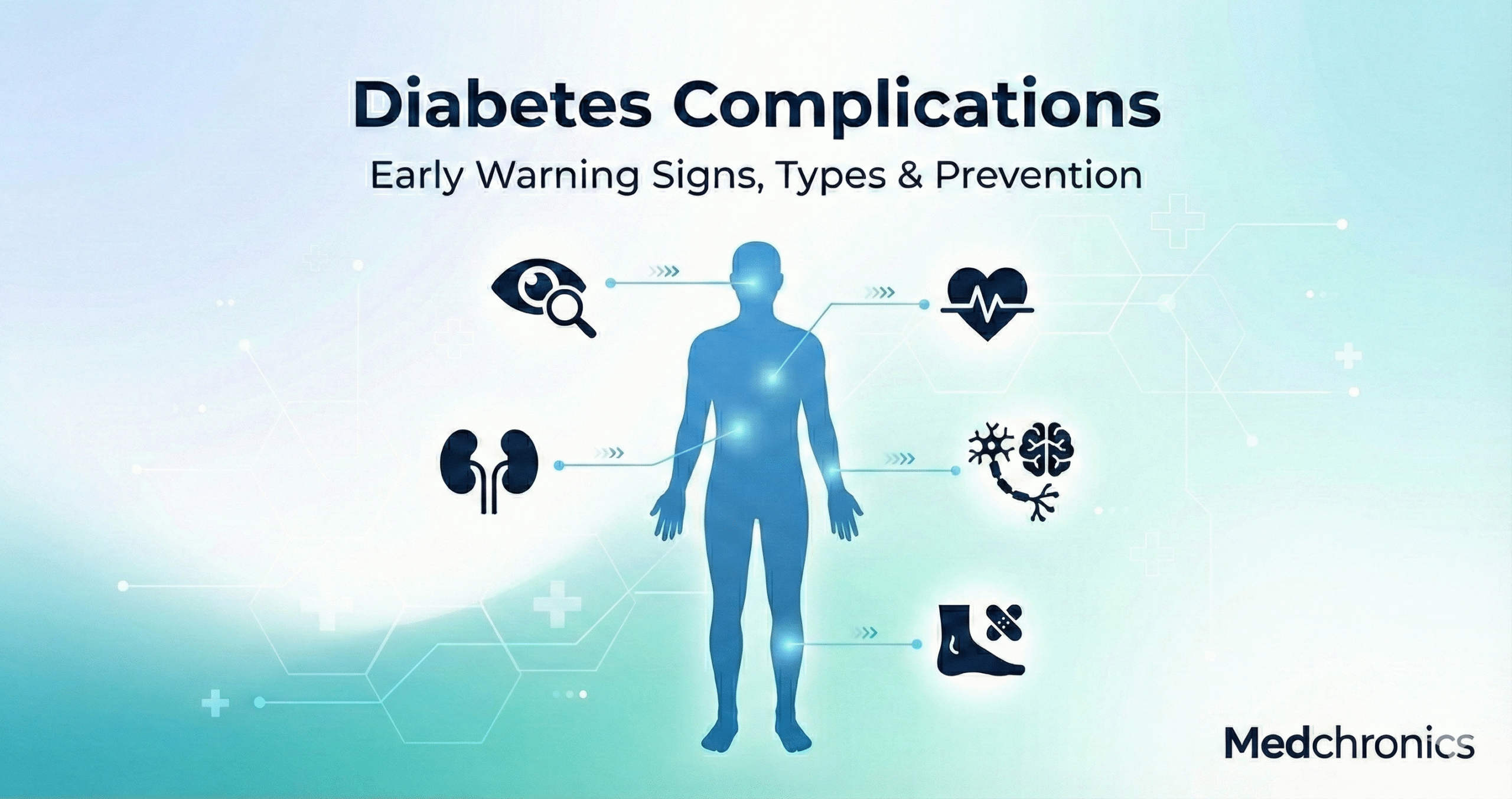
Diabetes is a long-term condition, but the real danger comes from its complications. Many people live with diabetes for years without symptoms, and complications slowly develop in the background. The good news is that most diabetes complications are preventable with early action, good sugar control, and regular check-ups.
This complete guide explains what diabetes complications are, why they happen, early warning signs, and how you can prevent or slow them down.
Table of Contents
What are diabetes complications?
Diabetes complications are health problems caused by long-term high or unstable blood sugar levels. Over time, excess glucose damages blood vessels, nerves, and organs.
These complications do not appear overnight. They develop gradually and may remain silent for years, which is why diabetes is often called a “silent damage” disease.
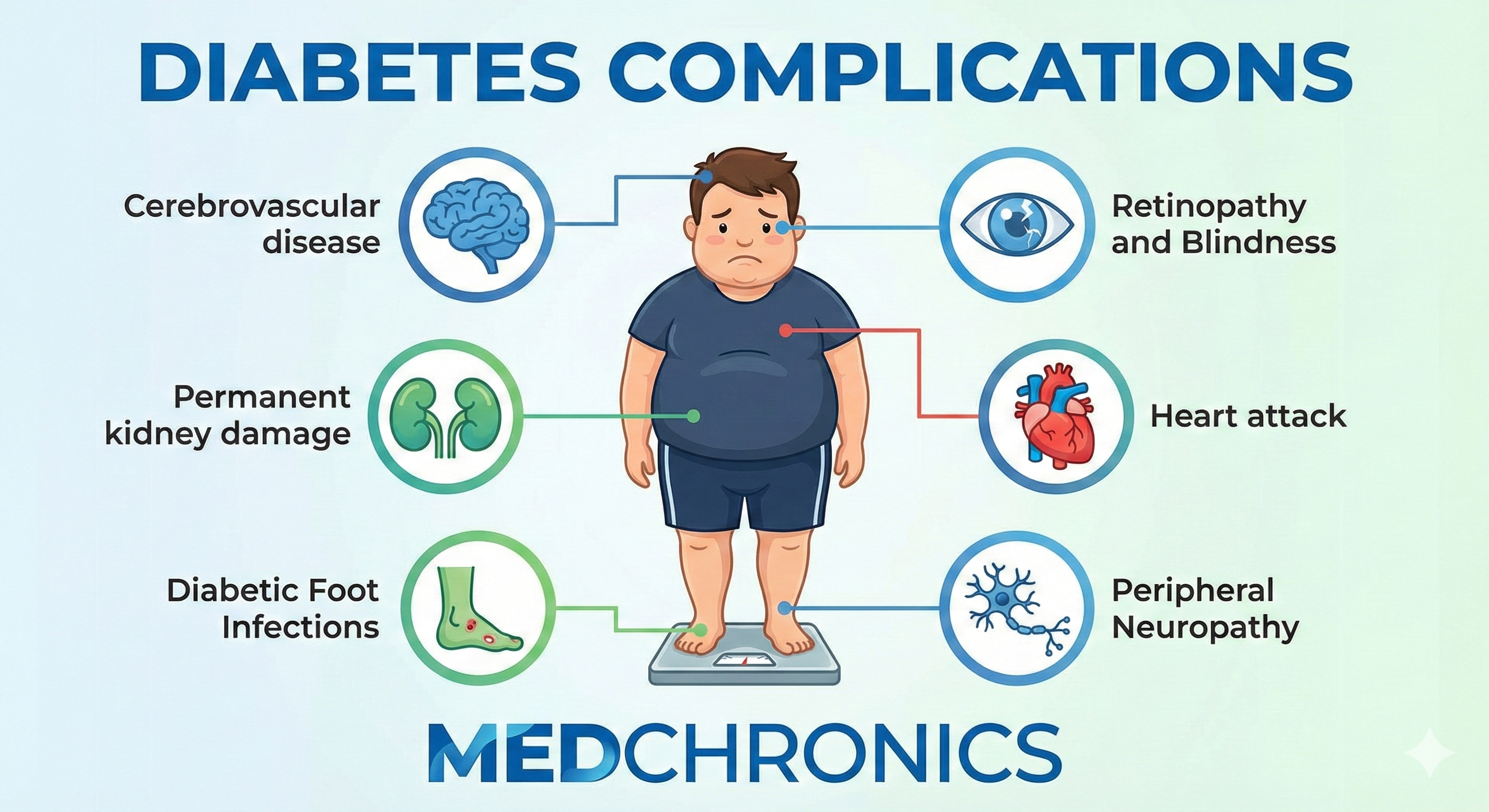
Complications can affect:
- Eyes
- Kidneys
- Nerves
- Heart and blood vessels
- Feet and skin
Acute vs chronic complications
Diabetes complications are broadly divided into acute (short-term) and chronic (long-term).
Acute complications
- Develop quickly (hours to days)
- Often life-threatening
- Need immediate medical care
Chronic complications
- Develop slowly over months or years
- Cause long-lasting damage
- Can often be prevented or delayed
Understanding this difference helps patients act at the right time.
Short-term complications (DKA, Hypoglycemia)
Diabetic Ketoacidosis (DKA)
DKA happens when the body does not have enough insulin and starts breaking down fat for energy. This produces ketones, which make the blood acidic.
Common symptoms:
- Very high blood sugar
- Excessive thirst and urination
- Nausea and vomiting
- Abdominal pain
- Deep or rapid breathing
- Fruity-smelling breath
- Confusion or drowsiness
DKA is a medical emergency and requires hospital treatment.
Hypoglycemia (Low blood sugar)
Hypoglycemia occurs when blood sugar drops too low, usually due to:
- Excess insulin or diabetes medicines
- Skipping meals
- Heavy exercise without food
Common symptoms:
- Sweating
- Shaking
- Hunger
- Dizziness
- Confusion
- Loss of consciousness (in severe cases)
Quick sugar intake (glucose tablets or sweet juice) can prevent serious outcomes.
Long-term complications
Long-term complications result from years of uncontrolled or poorly controlled diabetes.
Eyes (Diabetic retinopathy)
High sugar damages tiny blood vessels in the retina.
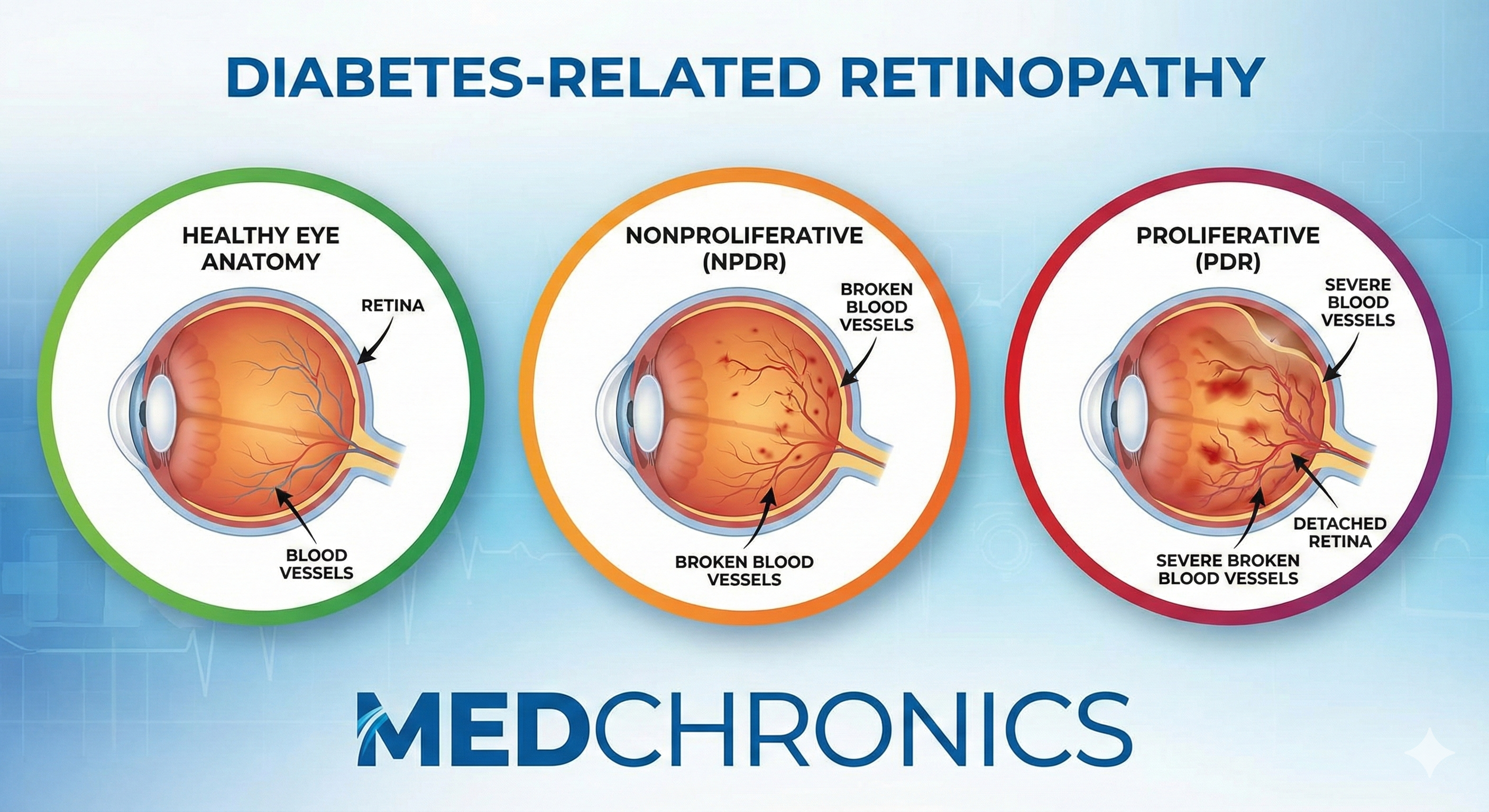
Problems include:
- Blurred vision
- Difficulty seeing at night
- Vision loss or blindness (advanced stage)
Early stages may have no symptoms, so regular eye exams are critical.
Kidneys (Diabetic nephropathy)
Kidneys filter waste from the blood. Diabetes damages these filters over time.
Warning signs:
- Protein in urine
- Swelling of the feet or face
- Fatigue
- High blood pressure
If untreated, it can progress to kidney failure.
Nerves (Diabetic neuropathy)
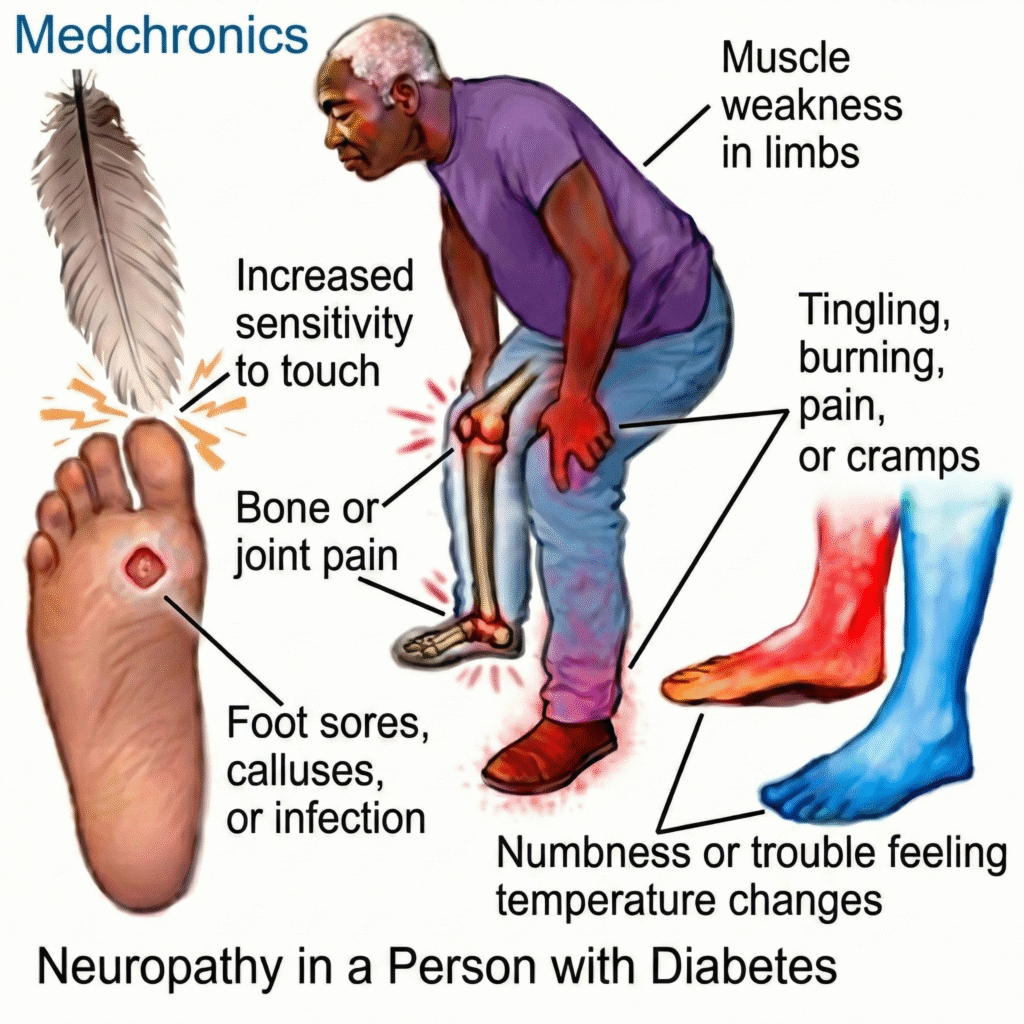
High sugar damages nerves, especially in the feet and hands.
Symptoms include:
- Tingling or burning sensation
- Numbness
- Pain in the feet or legs
- Loss of sensation (injury risk increases)
Nerve damage is a major reason for foot ulcers and amputations.
Heart and blood vessels
Diabetes greatly increases the risk of:
- Heart attack.
- Stroke.
- High blood pressure.
This happens because diabetes accelerates atherosclerosis (hardening of the arteries).
The primary cause of death for those with diabetes is heart disease.
Feet (Diabetic foot problems)
Foot problems occur due to:
- Poor blood circulation
- Loss of sensation
- Infections
Common issues:
- Foot ulcers
- Slow-healing wounds
- Infections
- Gangrene (in severe cases)
Daily foot care can prevent most serious foot complications.
Early warning signs you should never ignore
Many complications start silently, but some warning signs include:
- Persistent fatigue
- Frequent infections
- Blurred vision
- Tingling or numbness in the feet
- Slow-healing cuts
- Swelling of legs or face
- Chest pain or breathlessness
Ignoring these signs can lead to permanent damage.
Who is at high risk?
You are at a higher risk of diabetes complications if you:
- Have poor blood sugar control
- Have diabetes for many years
- Smoke or consume alcohol regularly
- Have high blood pressure or high cholesterol
- Skip regular medical check-ups
- Are you overweight or physically inactive
The more risk factors present, the faster complications can develop.
Can diabetes complications be prevented or reversed?
Prevention
Most complications can be prevented or delayed by:
- Maintaining target blood sugar levels
- Regular HbA1c testing
- Healthy diet and portion control
- Regular physical activity
- Controlling blood pressure and cholesterol, Annual eye, kidney, and foot screening
Reversal
- Early-stage complications can improve
- Advanced damage may not be fully reversible, but progression can be slowed
Early action makes a huge difference.
When to see a doctor?
You should get medical help as soon as possible if you have:
- Repeated low or high sugar episodes.
- Vision changes.
- Numbness or pain in the feet.
- Chest pain.
- Swelling of legs or face.
- Non-healing wounds.
- Symptoms of DKA or severe hypoglycemia.
Regular follow-ups are essential even when you feel fine.
Diabetes complications are serious but largely preventable. The key lies in early detection, consistent care, and informed decisions. Managing diabetes well today protects your health for the future.
Frequently Asked Questions (FAQ)
Q. Can diabetes complications occur even with mild diabetes?
Yes. Complications depend on duration and control, not just severity.
Q. How often should diabetes screening be done?
Most guidelines recommend:-
HbA1c every 3–6 months.
Eye, kidney, and foot exams at least once a year.
Q. Are complications more common in type 1 or type 2 diabetes?
Both types can develop complications. Poor control increases risk in both.
Q. Can lifestyle changes really prevent complications?
Yes. Lifestyle changes combined with medication are proven to reduce complications significantly.